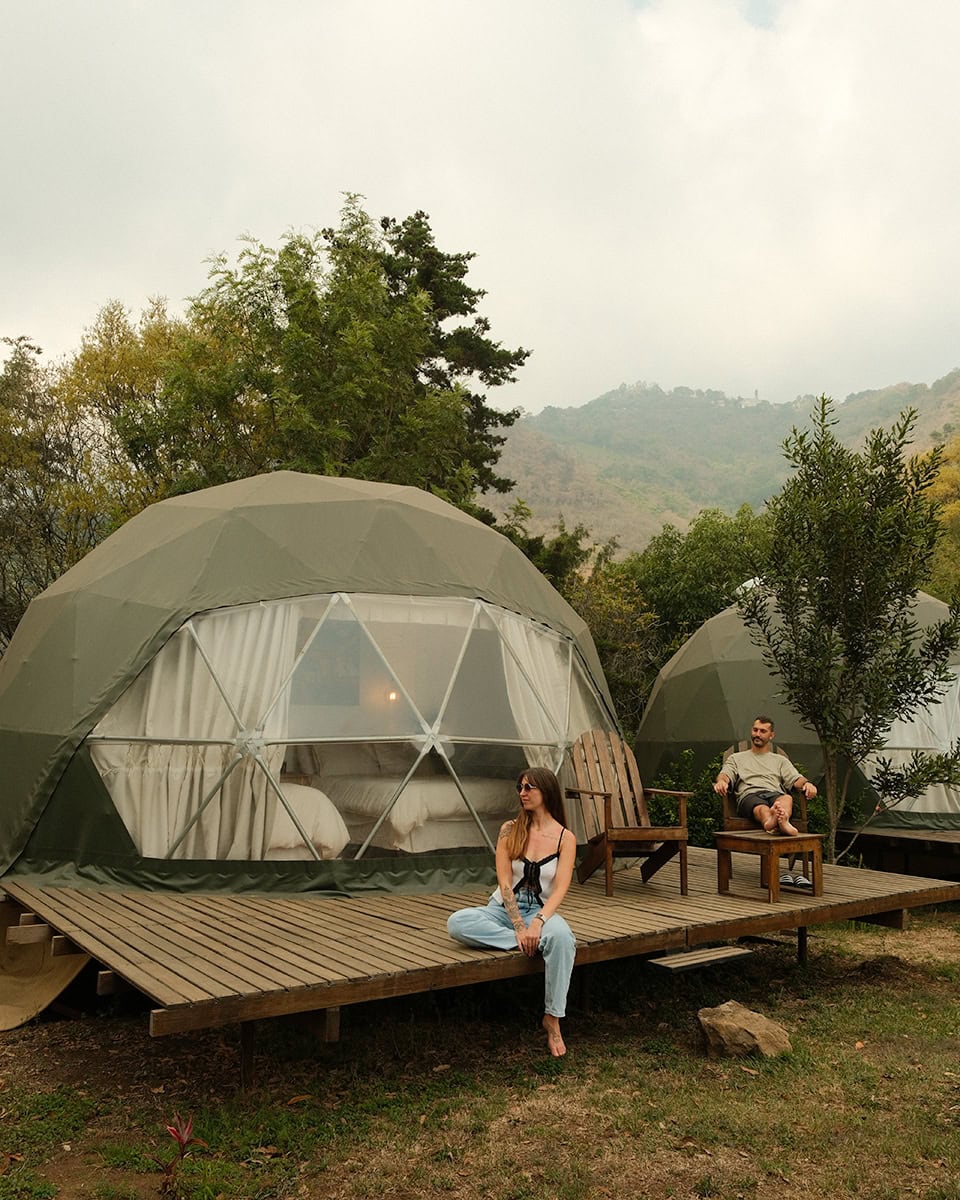
Acatenango Volcano Hike: My Two Completely Different Experiences


I did the Acatenango overnight hike for the first time nearly 9 years ago, and I genuinely haven’t stopped talking about it since. That first visit is easily my favourite travel experience I’ve ever had.
So when James and I spent 7 weeks in Guatemala earlier this year, there was absolutely no way I wasn’t dragging him up that volcano!
But my second experience wasn’t quite what I expected. Not a disaster, exactly. But very different. And honestly, I’m so glad I did it all those years ago, because it’ll never be quite the same again.
Guatemala has had a massive tourism boom since my last visit, and Acatenango has felt every bit of that. We missed sunrise entirely after our guide overslept, the mountain felt twice as crowded as I remembered, and the whole experience made me realise just how much Acatenango tourism has changed over the last decade.
The difference between my two experiences came down to three things: overtourism, the company we booked with, and my own expectations.
This guide covers all of it, including how to make sure you actually have a great time up there rather than a frustrating one. If you’re trying to figure out whether Acatenango is worth it, how hard it actually is, and which company to book with, keep reading.
Is the Acatenango Hike Worth It?
100 fucking percent. Without question. I don’t think I’ll ever answer this differently. Climbing Acatenango is absolutely worth it.
Watching lava shoot out of Fuego every 5 to 10 minutes, feeling the ground tremble under your feet, you just can’t explain that feeling. Both times I’ve done it, the moment Fuego first erupts has stopped me completely in my tracks. All the hard work to get up there just evaporates.
And yes, there is some hard work. The altitude can catch you off guard, even if you’re reasonably fit, and the hike up to base camp on day 1 takes time. But the second you hear that first boom echoing across the valley, or see that first glow of lava against the night sky, none of it matters anymore.

But, and this is a big but, you do need to go in with realistic expectations, because this is where I went wrong the second time.
Acatenango isn’t quite the untouched experience it was when I first did it nearly a decade ago. The mountain is busier now, some companies are far more responsible than others, and your experience really can vary massively depending on who you book with.
I don’t say that to put you off, I’d still recommend this hike in a heartbeat, but I do think it’s important to go in with realistic expectations.
So yes, go. Just go in informed. It’s bloody worth it.
My Two Very Different Experiences Hiking Acatenango
I knew going back would feel different. Nearly a decade had passed, Guatemala’s tourism scene had completely changed, and I wasn’t a solo backpacker anymore.
But, to be honest, I wasn’t prepared for just how different it would actually be. I’ve had some time to reflect on it now, and the contrast is pretty stark.
The First Time I Hiked Acatenango
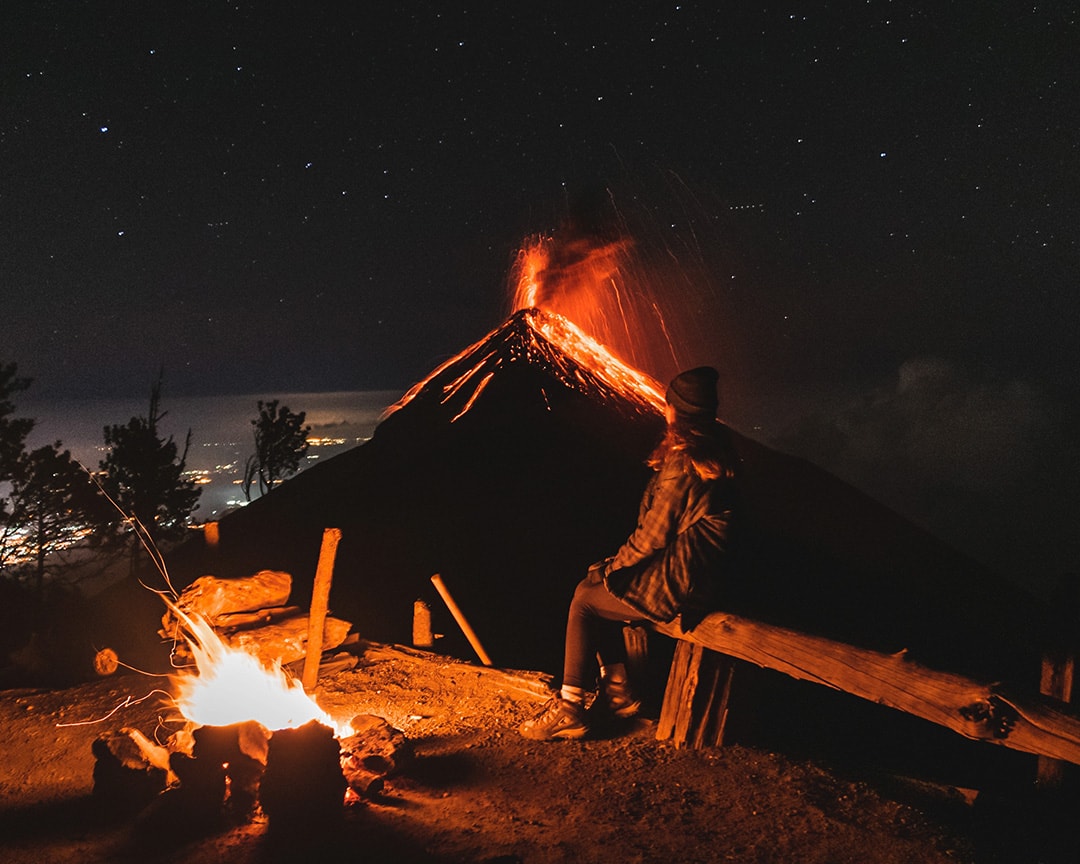
When I first hiked Acatenango nearly 9 years ago, it felt like a proper secret, and only a few people were in on it. There were only a handful of companies running tours, the trails were quiet, and as far as I know, nobody was doing the extra hike out to Fuego, or if they were, it was pretty rare.
Our camp was tucked into the side of the mountain, just us in our tents with no other camps nearby. It felt remote, wild and just really special.
Our group was small, our guides genuinely cared, and the whole experience felt incredibly personal. They woke us up in plenty of time for the sunrise hike, had everything well organised, and made sure we packed out every bit of our rubbish before leaving.
It sounds so cliché, I know, but that trip changed something in me, which is exactly why I was so determined to experience it again and show James what I’d been raving about this whole time.

The Second Time Was a Completely Different Experience
I’ll try not to rant here, because ultimately this comes down to one operator rather than Acatenango itself. But I do think it’s worth being honest about what happened, because it’s exactly the kind of experience you should be trying to avoid when you book (I thought I’d done really good research here, but obviously not).
When we reached base camp, one of our guides told us that he’d just come off a week-long bender, and by the hike up to the summit the next day, it was pretty obvious he wasn’t in a fit state to be leading a group.
To be fair, he turned out to be a freelance guide rather than one of the company’s main staff, and the other two guides with our group were actually great. But unfortunately, this particular guide was responsible for leading us up to the summit on the second day, which is where most of the issues happened.

He overslept that morning (we had to wake him up), which meant we missed sunrise entirely. At another point on the trail, he told us to continue ahead alone on a route that isn’t clearly marked and genuinely isn’t safe to navigate without a guide.
It wasn’t dangerous in the end, but it easily could have been. And honestly, it was deeply unprofessional.
Beyond our guide, the mountain itself felt completely different too. There were more camps stacked on top of each other, bigger groups, more noise, and noticeably more rubbish along the trails.
Not enough to ruin the experience entirely, but enough that it no longer felt like the quiet, tucked-away adventure I remembered from years ago.
It made me realise just how much your experience depends on the company you choose.

How Difficult Is the Acatenango Hike Really?
The first time I did this hike, I was at the tail end of a 12 month backpacking trip. I was partying most nights, I was a smoker, and I was not at my healthiest.
The second time around, I was fitter and only have the occasional cigarette now and then, and the difference was very noticeable.
But here’s the thing about altitude: it doesn’t care how fit you are. You could be a marathon runner and still find yourself stopping every few steps gasping for breath. Someone who never exercises could sail past you.
It’s humbling, and it catches people off guard every single time. The last stretch up to base camp is where the altitude really kicks in. Your legs feel fine, but your lungs are absolutely done.
The Acatenango elevation gain is roughly 1,500 metres across the 2 days, it doesn’t sound that dramatic on paper, but at altitude, trust me, it absolutely is. Just take your time. Seriously, there’s no rush.
The mental side of it is underrated too. When you’re getting breathless after just a few steps, it can really get in your head. Just remind yourself that’s completely normal at altitude, slow down, take the breaks you need, and you will get there (you’re doing amazing!).
Honestly, don’t clock watch too much. Stick on a good podcast or DJ set, focus on putting one foot in front of the other, and you’ll get there eventually.

Starting the Hike From Antigua
Most people do Acatenango as an overnight tour from Antigua. You’ll usually meet at your company’s office in the morning to pick up any gear you need, then get driven out to the trailhead together.
If you can, I’d really recommend spending at least a couple of days in Antigua before you do the hike. Antigua already sits at around 1,500 metres above sea level, so giving your body a bit of time to adjust before you even attempt the volcano genuinely makes a difference.
From the trailhead, most people take somewhere between 3 and 5 hours to reach base camp. Once you’re up there, you’ve got views straight over to Fuego.
If you fancy the optional Fuego hike, that’s roughly another 4 hours of hiking on top of what you’ve already done. Otherwise, most people just relax at camp, eat dinner, and try to get to bed at a reasonable hour, you’ll need it.
Around 4am the next morning, you’re up for the sunrise summit push, which takes about 1.5 hours up and 45 minutes back down.
Then it’s the main descent off the volcano, which usually takes another 3 to 4 hours. By the time you’re back in Antigua you will absolutely have earned your lunch.
A Few Other Things Worth Knowing
This hike is also much slower than people expect. Depending on your fitness, the altitude, and how often you stop, getting to base camp can take anywhere from 3 to 5 hours.
Some people move much faster than others, and that’s completely fine. Most groups naturally split into smaller pace groups, usually faster hikers, middle of the pack hikers, and slower hikers, and good guides should stay with each group without making anyone feel rushed or pressured to keep up.
Temperature. You’ll be sweating on the way up, then freezing the second you stop moving. Layers you can easily pull on and off are absolutely essential, especially once the sun starts going down at base camp.
Sleep deprivation. If you’re doing the sunrise hike, the hike out to Fuego, or both, you are going to be tired. You’ll either be going to bed late, getting up early, or both.
Get to base camp first and then decide what you want to do based on how you feel.
Your backpack. Some people hire porters, which you pay for each way. I carried my own both times, and honestly, it’s doable, just keep the weight down wherever you can. Every extra kilo feels like three by the time you’re at altitude.
The descent. This nearly broke my knees 9 years ago, and it nearly broke them again this time. It is brutal.
Hire hiking poles, they make a massive difference. Just don’t hire them from your tour company. Rent them from the car park at Acatenango instead, you’ll pay about a third of the price.

Should You Do the Additional Fuego Hike?
One thing you’ll hear people talking about a lot is the optional hike out to Fuego. This is usually offered as an add-on through your tour company for an extra cost (normally around 250Q–300Q per person).
I haven’t personally done it on either of my trips. The view of Fuego erupting from Acatenango base camp has honestly always been enough for me, and the thought of climbing all the way back up to camp afterwards sounds absolutely brutal.
That said, pretty much everyone I’ve spoken to who has done it says it’s incredible, so don’t let my choice put you off if it’s something you’re excited about.
I would just strongly recommend checking your travel insurance policy properly before you book it. Some insurers don’t cover the Fuego hike at all because of the volcanic activity and added risk, and the last thing you want is to find that out after an accident.
Choosing the Right Acatenango Tour Company
Acatenango was always going to get more popular, and honestly, I expected that. But alongside the tourism boom, I really did notice a difference in how some companies run their tours.
More than anything else, who you book with will make the biggest difference to your experience up there.
Ethics and Responsibility
I’m putting this first because, honestly, everything else stems from it.
Before you book anything, check the company’s website. Do they actually talk about what they’re doing to operate responsibly? Look for things like packing out rubbish, supporting local communities, and getting involved in clean-up projects.
And please, please avoid any company that uses horses on this hike. It’s genuinely cruel, and I will side eye you.
Then cross-reference everything with reviews. If a company isn’t living up to what they advertise, people usually mention it pretty quickly.

Guide Professionalism
Our guide on the second trip was a freelancer, and I think we just got unlucky, as no reviews mentioned anything similar about the company we booked with. The other two guides with our group were actually great.
But it was still a reminder that not all guides are employed directly by the company you book with, and one bad guide can massively affect your experience.
I was also genuinely shocked at how many reviews mention intoxicated or disengaged guides. I made a video talking about how much Acatenango has changed, and the comments alone sparked a whole conversation around this topic. It’s clearly more common than it should be.
Check reviews specifically mentioning guides. Were they knowledgeable? Did they pace the group well? Were they actually present and engaged? A good guide makes a huge difference to the whole experience.
Safety
Does the company mention what safety measures they have in place? Are they upfront about how difficult the hike is? Do they tell you what to bring and how to prepare?
I’ve seen so many reviews from people who turned up completely underprepared, with wrong footwear, not enough layers, and no idea what they were getting themselves into.
Yes, people should absolutely do their own research too, but a responsible company should still make sure you understand what you’re signing up for before you hand over your money.
The same goes for altitude. Neither of us took altitude tablets, but it’s absolutely something companies should at least mention so you can make an informed choice. If altitude isn’t discussed at all before the hike, I’d personally see that as a red flag.

Group Size
Smaller groups cost more, but they’re worth it. You get more attention from your guide, a better pace, and a quieter experience on the mountain.
On my next visit (because I will go again lol), I’d honestly go for a private tour.
If budget is a factor, you’ll probably end up in a larger group, which is completely fine, just something to be aware of.
The bigger issue is usually the ratio of guides to hikers. A large group with experienced, attentive guides can work well. A massive group with one guide who’s nowhere to be seen is where things start becoming a problem.
Gear and Equipment
Most companies include some gear in the price, but check what’s actually covered. Sleeping bags, mats, and warm layers for camp are the big ones.
Make sure you know what you need to bring yourself and what you can rent, so there are no surprises on the day.
Food
This was a big one for us as vegans. Don’t assume dietary requirements will automatically be catered for. Ask directly before you book, then check reviews to see whether other people with dietary requirements had any issues.
The last thing you want is to be at 3,700 metres with nothing to eat for dinner.
Communication
This ties into everything above. How does the company communicate with you before the hike? Are they responsive? Do they send you a clear brief on what to expect, what to pack, and how to prepare?
If they’re vague, slow to respond, or difficult to get hold of before you’ve even paid, that usually tells you something.

The Companies I’d Personally Recommend
I want to be upfront about something before I get into this. The company we used on my second trip, I genuinely can’t recommend them, even though in a lot of ways they were great.
The food was good, they catered well for us as vegans, the gear was solid, and the communication was fine. But the guide situation was a serious problem, and knowing they work with him regularly makes it impossible for me to point you in their direction in good conscience.
So instead, here are the companies I’d genuinely feel good about recommending based on my own research, conversations with other travellers, and what I personally saw on the mountain.
CA Travelers
CA Travelers were actually who we planned to book with the second time around, but they were fully booked for weeks, which honestly tells you a lot.
Our friends used them and had a brilliant experience, and someone else mentioned that their main guide, Alejandro, asked the group to collect any rubbish they spotted on the trail and hand it to him. That’s exactly the responsibility that’s needed!
Their camp was also right next to ours on our second trip, and looked noticeably better than where we were staying.
Beyond the hike itself, CA Travelers run a social impact programme called CA Cares, which supports the local community of San José Calderas through education and healthcare initiatives, including qualified teachers, school scholarships, internet access, kitchen equipment, and more.
They also cater well to different dietary requirements, which is always a huge win!
Wincho & Charlie’s
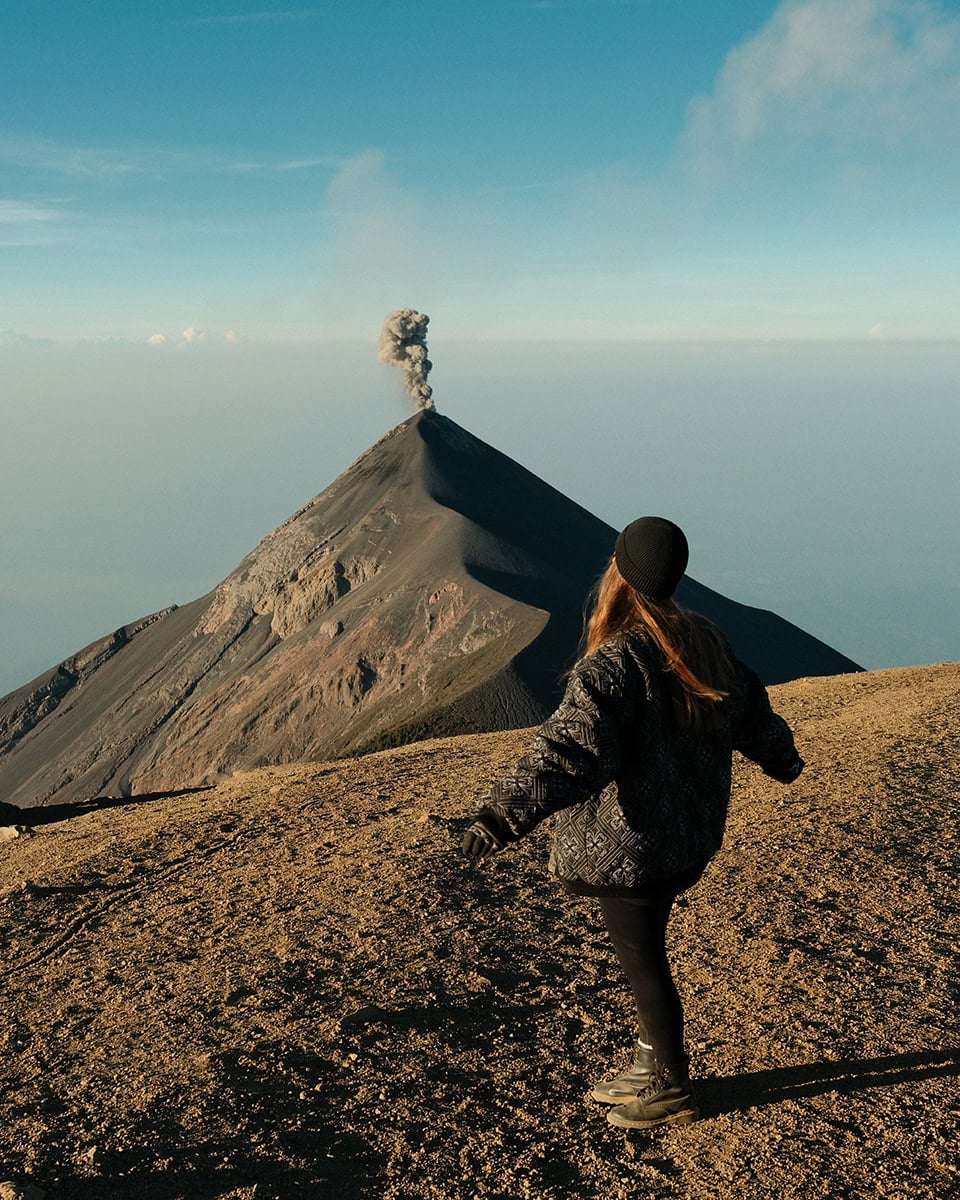
Wincho & Charlie’s have been operating for a long time (they actually were a hostel when I was there in 2017) and are doing really impressive work on the sustainability and ethics front.
Their default meals are hearty plant-based options, which as a vegan I obviously love, though they cater for other dietary requirements too.
They’re actually based in the same building as Once Once, a vegan restaurant in Antigua that James and I absolutely loved, and you can literally see into their office on the way into the restaurant.
Their gear and equipment looked high quality, and something that genuinely made me smile, they send hikers up the mountain with dog food to feed the stray dogs you meet along the trail.
They also have a firm stance against single-use plastics, support the Santuario Vida Animal rescue centre, and have donated desks, chairs, and school supplies to the local school in La Soledad village.
OX Expeditions
OX Expeditions are also worth looking into, especially if sustainability is important to you.
They have a Leave No Trace policy, and a lot of their campsite has been built using sustainably harvested wood from Eco-Madera. They also collect and filter rainwater at camp, use solar panels at their office, and even maintain a small pine nursery at the campsite.
Another thing I like is that they offer different tour options depending on your preferred group size, which gives you a bit more flexibility depending on the kind of experience you want.

What to Pack for the Acatenango Overnight Hike
Most Acatenango packing lists online are way longer than they need to be. Here’s what actually matters.
- Layers, layers, layers. I will say this until I physically can’t anymore. You need them. By the time you reach base camp, you’ll be absolutely soaked in sweat, and the second you stop moving, that sweat will make you feel like an ice block. Pack a dry, fresh layer specifically to change into when you arrive at camp.
- Spare socks. Same reason as above. Nobody wants trench foot halfway up a volcano.
- A big warm coat. Most companies will have these to rent or borrow. Check before you book so you know what’s included.
- Decent hiking boots. Comfortable and grippy is all you need. For what it’s worth, I hike in my Doc Martens, and everyone on the trail thought I was absolutely nuts, but they’re genuinely the most comfortable shoes I own, and the grip is great.
- Gloves, a hat, and a warm jumper for camp. It gets so cold up there overnight, even when snuggled up in your sleeping bag. Don’t underestimate it.
- Hiking poles. Rent them from the car park at Acatenango, not from your tour company. You’ll pay about a third of the price, and your knees will thank you on the descent.
- Snacks. Most companies include some food, but honestly, it’s not enough to keep your energy up on the hike. Bring energy bars, nuts, and electrolytes. The electrolytes in particular, are brilliant at altitude.
- Camera gear — but be selective. I carried 2 cameras and 2 lenses up on my second trip, and they are heavy. Only bring what you know you’ll actually use. And whatever you bring, pack a battery bank, the cold drains batteries faster than you’d think.
What Nobody Told Me Before Hiking Acatenango
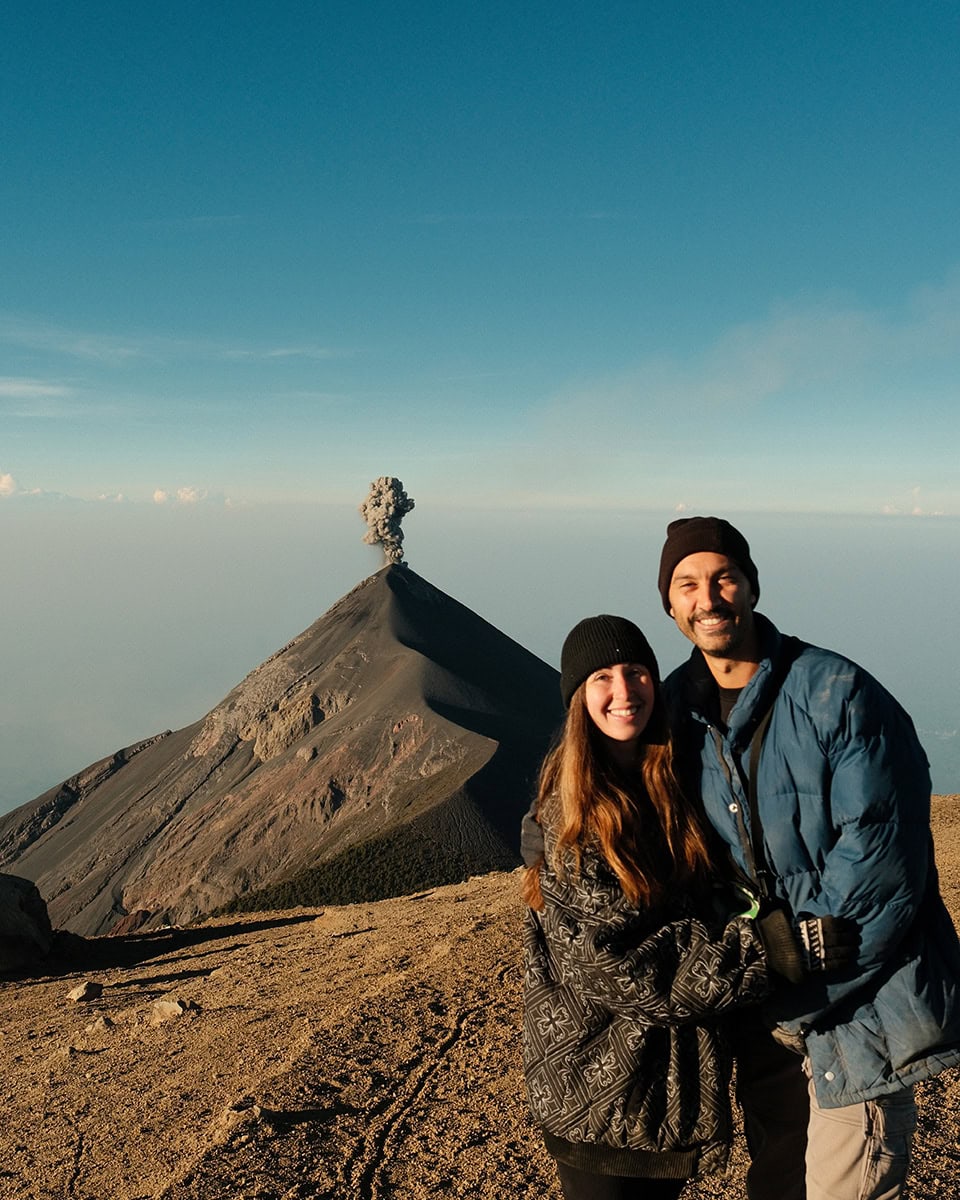
It is genuinely, fucking cold. Before my first trip, people warned me that it gets cold. I nodded and didn’t really take it seriously. I should have. The second the sun goes down, the temperature drops hard and fast. When someone tells you to bring layers, they are not over exaggerating.
The toilet situation. I’m a germophobe with an awful gag reflex, so I say this with full awareness that I might be more sensitive than most. The drop toilets at camp are grim. There’s no plumbing up there, and that’s completely fine, why should there be, but I’m not sure they’ve ever been cleaned. Without being too graphic, there was a build up that genuinely looked years old. Bring hand sanitiser and hold your breath.
Black dust. Everywhere. I was blowing black dust out of my nose for days after both trips. If you can get a thin breathable scarf or buff to wear on the trail, do it.
Camp can be absolute chaos. My first trip, the group was small, about 12 of us, and it was super calm and easy. The second time, it was a free for all. When we arrived at camp, some people weren’t even sure there were enough beds for everyone.
People had thrown their stuff on bunks to claim them, it was loud, and people in nearby camps were drinking and screaming well into the night. If you’ve never done it before, you might not notice. But for me, knowing what it can be like when it’s quieter, it was such a stark contrast.

The overcrowding genuinely got to me. My jaw hit the floor when I saw how the campsites are literally stacked on top of each other now. I found it really fucking sad if I’m honest.
Altitude headaches are real. On the hike up, I had a lot of pressure behind my eyes. It wasn’t unbearable, but it was noticeable. Electrolyte drinks genuinely helped, though, and I was sweet when we actually stopped at camp.
You will not sleep much. Between the cold, the noise from other camps, and Fuego erupting loudly enough to shake the cabin walls at times, sleep is pretty elusive.
If you’re also doing the sunrise hike (which starts around 4am), or the Fuego hike where people sometimes don’t get back until midnight, factor in that you’ll probably be running on very little sleep.
Fuego is unpredictable. Both times I went, I was incredibly lucky, and Fuego was really active. On my most recent trip, it was erupting every 2 to 3 minutes at points. But I’ve spoken to people who had thick cloud cover the whole time and couldn’t see a thing, and others who could see Fuego but no eruptions at all. It’s completely down to luck and Mother Nature.

Is Acatenango Tourism Becoming Unsustainable?
This is a genuinely difficult conversation to have, because there’s no clean answer. Acatenango tourism is good for the local economy, it gives people access to something truly rare and extraordinary, and I’d never want to take that away.
But I do think responsibility and care for the volcano and the surrounding environment have taken a real back seat in recent years.
The rubbish on the trails, the sheer number of structures now being built into the side of the mountain, and the way camps are stacked on top of each other with seemingly very little regulation, is hard to ignore.
So is the inconsistency between tour operators when it comes to professionalism, safety, and environmental responsibility. At some point, something has to give.
I don’t have easy answers, and it’s not lost on me that my writing a guide to this hike makes me part of the same system. But I do think the least any of us can do is be deliberate about who we book with, how we behave on the mountain, and the kind of tourism we’re choosing to support.

Would I Hike Acatenango Again?
Genuinely, I could do this hike a thousand times and still not get bored of standing at camp watching Fuego erupt. There is no way to describe that feeling, you do just have to see it for yourself.
And despite everything I’ve mentioned in this post, I genuinely believe you can still have an incredible experience up there. The volcano hasn’t changed. The eruptions haven’t changed. That feeling hasn’t changed.
What has changed is the infrastructure around it, and the wildly inconsistent standards of the companies running tours up there.
Which is exactly why going in with your eyes open matters so much. Know what to expect. Research your tour operator properly.
Make sure they align with your values, ethically, environmentally, and in terms of how they actually treat the mountain and the people who live nearby. The companies that are doing it right are absolutely worth seeking out.
If I were booking Acatenango again tomorrow, I’d personally book with CA Travelers. Between everything I’d heard from other travellers, what I saw firsthand on the mountain, and the work they’re doing through their CA Cares programme, they’re the company I’d feel best supporting.
Acatenango is still one of the most extraordinary things you can do in Guatemala. Just do it thoughtfully.