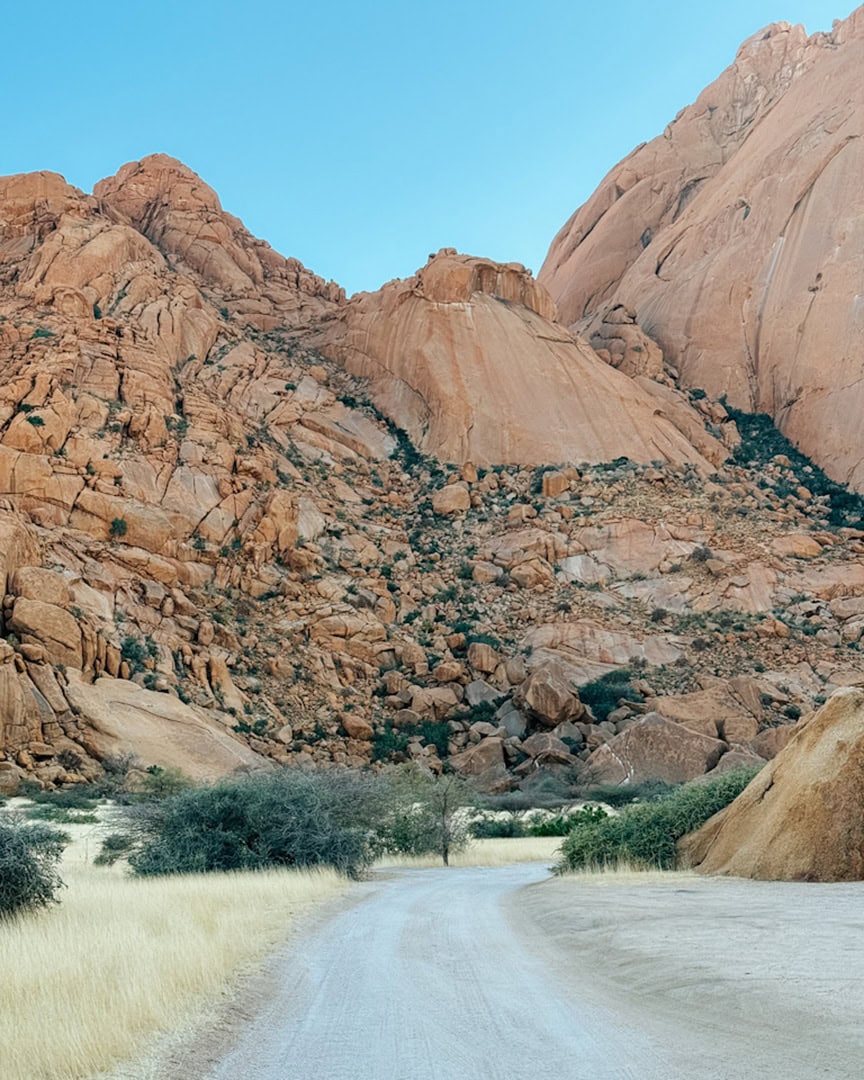
This Overnight Hike Is Steep and Cold at the Top — But You’ll Have Front-Row Seats to an Erupting Volcano

The Acatenango volcano overnight hike is hands down my favourite trek I’ve ever done, and I’ve done quite a few!
It’s tough, don’t get me wrong, but the views make the slog more than worth it, especially when you’re watching lava shoot out of Volcán Fuego in the middle of the night!
Here’s everything you need to know about the hike!
Why Hike Acatenango?
While travelling through Central America, I kept hearing about this one volcano in Guatemala that erupts constantly. That’s Fuego. But the real magic? You can actually climb its dormant sister, Acatenango, and watch the action from up close. It’s easily one of the wildest and unique hikes you can do.

What You Need to Know
Difficulty: It’s hard. You’re hiking at altitude, gaining over 1,500m of elevation on day one alone. The trail is steep and relentless, but it’s well-marked and ok if you’re reasonably fit.
Altitude: The summit is 3,976m above sea level. You’ll feel it. I highly recommend spending a few days in Antigua beforehand to acclimatise.
Cost: Tours usually cost $60–90, depending on what’s included. Some cover park entry (Q110 / ~$12), others don’t, so double-check.
Is it safe? Technically, Acatenango is dormant. Fuego is the one doing all the erupting, and while it’s considered relatively safe, there is always some risk when hiking near an active volcano.
Best time to go: Aim for the dry season (November–April) to avoid cloud cover and maximise your chance of seeing lava.
Where to Book Your Hike
There are loads of companies to choose from, but here are three solid options:
1. Tropicana Hostel (budget-friendly)
Good for backpackers, sociable groups, and decent food. Includes meals, transport, gear, and a great base camp location.
2. Wicho & Charlie’s (popular, slightly more premium)
Similar to Tropicana but with the option to upgrade to a private cabin and more included gear (jacket, gloves, snacks, etc.). They also offer the Fuego hike as an add-on.
3. Old Town Outfitters (higher-end)
Smaller groups, more personalised experience, freshly prepared meals, and tents instead of cabins. More of a “luxury” option (as luxury as hiking a volcano can get, anyway).
Most companies also offer porter services if you don’t want to carry all your stuff.

What’s the Hike Like?
Instead of breaking this down by the hour, here’s how the trek flows across the two days.
The Climb Up
The day starts early with a pickup from your hostel in Antigua. You’ll drive about an hour to the trailhead in La Soledad, grab your packed lunch and walking sticks (highly recommend!), and start the hike.
The first stretch is brutal. You’re climbing through farmland and dusty trails at a sharp incline. It doesn’t let up much, so pace yourself and take breaks when you need to. Eventually, the trail leads into a cloud forest where things get cooler and greener, and you’ll reach the national park entrance.
You’ll pass through different microclimates on the way up: farmland, cloud forest, dry tropical forest, and finally volcanic terrain. As you gain elevation, the air gets thinner and the views start opening up. On a clear day, you’ll see all the way to Lake Atitlán.
Lunch is usually somewhere around halfway, and if you’re hiking with Tropicana Hostel like I did, expect a solid meal (burrito, brownie, juice—surprisingly decent for something that’s been squashed in a backpack for hours).
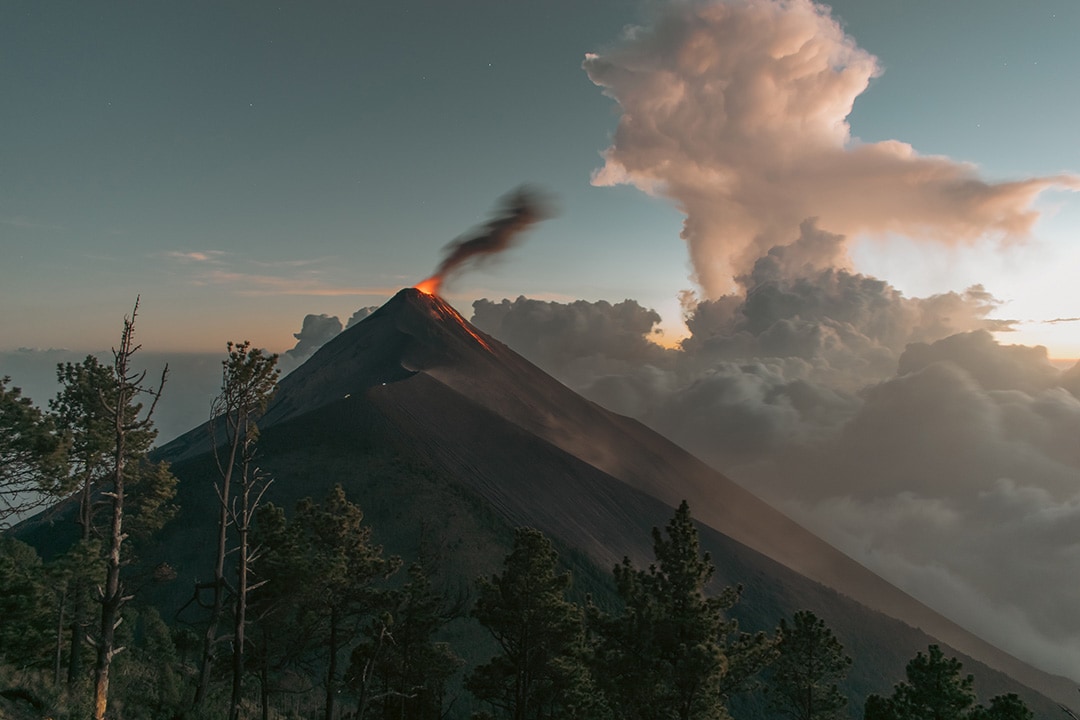
Eventually, you’ll zigzag your way around the volcano and hit the final stretch. It flattens out a bit and then BAM, there’s Fuego. Right in front of you, puffing smoke and rumbling in the distance. Welcome to base camp.
Base Camp Life
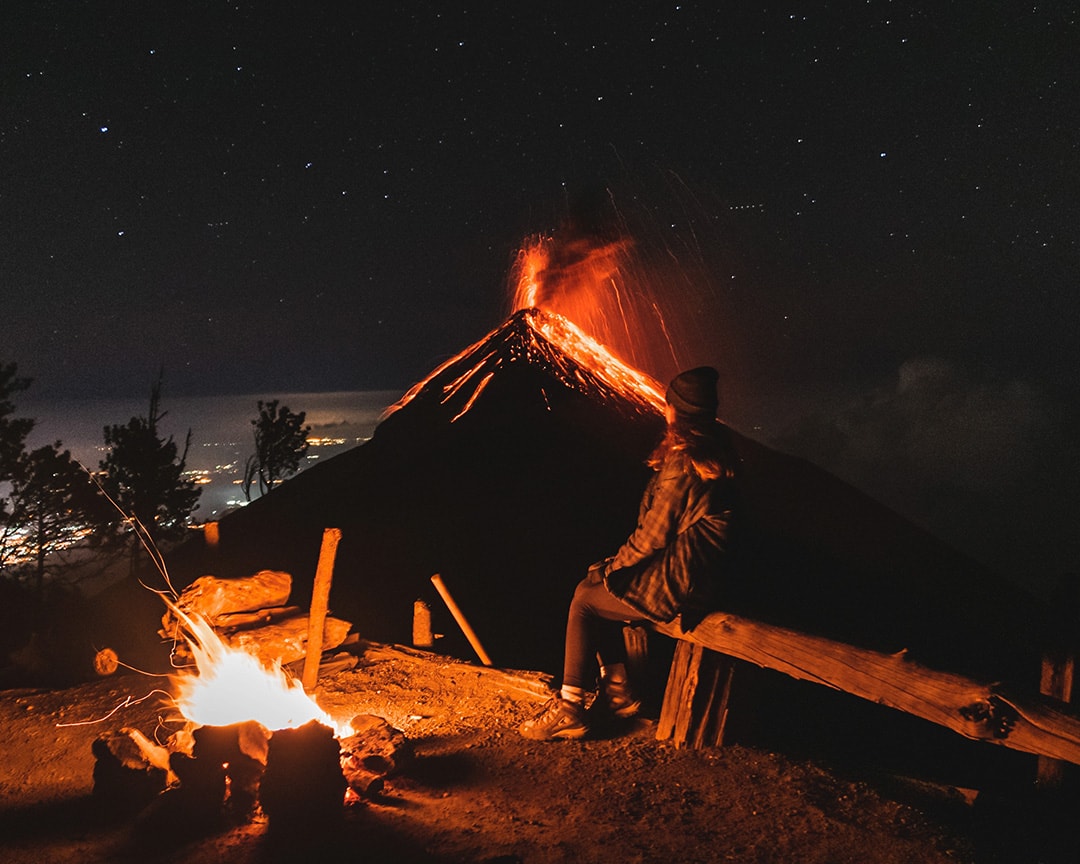
Base camp sits at around 3,600m with front-row views of Fuego. Once the sun sets, you’ll start to see those fiery orange eruptions light up the night sky. It’s honestly surreal.
Dinner is basic but hot, usually noodles or rice with veggies, soup, and a drink. You’ll huddle around the fire, sip hot chocolate, roast marshmallows, and swap stories while waiting for the next eruption.
It gets cold up there, so make sure you’ve packed warm clothes or rented gear from your tour provider. Gloves, hat, thermal layers, the works.
Optional: The Fuego Hike
Some companies (like Wicho & Charlie’s and OX Expeditions) offer an add-on hike to Fuego, which takes about 4 hours round trip. You’ll hike across a saddle and up to a ridge that’s just under a kilometre from the volcano.
It’s tough, especially after already hiking for hours, but many say it’s one of the most intense and unforgettable parts of the trip. I didn’t do it (my tour didn’t offer it), but if you’re up for the challenge, it’s worth considering.
The Summit
At 4am, you’ll be woken up for the optional sunrise hike to Acatenango’s summit. Don’t be surprised if a few people sit this one out, it’s cold, dark, and the altitude hits hard.
This part is more of a scramble than a hike. The ground is loose and slippery, and you’ll 100% want a headlamp for balance. I tried to use my phone light… regretted that very quickly.
But when you get to the top? Wow. The sky starts to glow, and you’re watching the sun rise above the clouds while Fuego erupts in the background. It’s next-level. Bring your camera. Bring extra layers.
The Climb Down
After a quick breakfast (usually banana bread or porridge), it’s time to head down. This is where those walking sticks really come in handy. The descent is steep and slippery, and your legs will already be sore.
You’ll reach the shuttle in about 2 hours, get a lift back to Antigua, and say goodbye to your guides and group. If you booked with Tropicana Hostel, you can use their showers afterwards, even if you’re not staying there. Trust me, that hot shower is going to feel so good.
What to Pack
Here’s a quick rundown of what you’ll need:
- Warm layers (gloves, hat, thermal base layers)
- Change of clothes (your hiking gear will be sweaty and gross)
- Hiking boots (or rent them)
- Toiletries (just the basics—there’s only a long-drop toilet)
- 4L of water (yes, really)
- Headlamp or flashlight
- Battery pack (cold weather kills phone batteries fast)
- Snacks (energy bars, fruit, trail mix)
- Backpack (you can rent one)
- Walking sticks (rent these too—they’re a game changer)

Final Thoughts
The Acatenango hike was the highlight of my 3 months in Central America. It’s one of the hardest hikes I’ve done, but also one of the most rewarding. Seeing Fuego erupt against the night sky is something I’ll never forget.
If you’re in Guatemala and up for a challenge, this should be right at the top of your list.