Is Bali Worth Visiting In 2026? Exploring the Pros and Cons!


Wondering if Bali is still worth visiting? Honestly, it’s a fair question.
Over the last few years, Bali has changed a lot. The island that once felt like a hidden escape has become one of the most popular destinations in the world, thanks in part to social media, digital nomads, and its starring role in Eat, Pray, Love.
And yes, some places are so much busier than they used to be. Areas like Canggu and Ubud have grown massively, traffic is chaotic, and some corners of Bali no longer feel quite as untouched as they once did.
I first visited Bali in 2015 and have returned multiple times since, so I’ve seen some of those changes firsthand. But the answer to “is Bali still worth visiting?” is still a yes, but you just need to go knowing what to expect.
Bali is not the quiet paradise it’s sometimes made out to be online, and responsible tourism matters now more than ever. Tourism brings huge benefits to the island, but it also comes with challenges, from waste and overcrowding to pressure on local communities and the environment.
That doesn’t mean you should skip it. It just means travelling a little more thoughtfully.
Because beyond the crowds, Bali is still home to incredible (vegan) food, beautiful landscapes, fascinating culture, and some of the warmest people you’ll meet.
In this guide, I’ll share everything you need to know about visiting Bali now, including the best areas to stay, places I think are still worth visiting, where you can skip, the best time to go, how to get around, and how to have a more responsible trip.

The Cons of Visiting Bali
There are, unfortunately, a few cons to visiting Bali, some of which you may already be aware of.
I honestly don’t think these are reasons not to visit, but I do think they can affect your trip, especially if you’re not expecting them!
Rubbish and pollution
Bali does have a real pollution problem, and unfortunately even some of the quieter spots aren’t immune.
If you’re picturing perfectly clean beaches everywhere, it can be a bit of a shock when you arrive. Places like Kuta can see plastic and rubbish wash up, especially during the wet season when debris gets carried in from the ocean.
Poor waste management plays a big part, but visitors do too. Honestly, the easiest thing we can all do is pretty simple: don’t be a dick. Take your rubbish with you, don’t leave plastic behind, and treat the island with the same respect you’d want from people visiting your own home.
The good news? There are still plenty of beautiful beaches where you can escape the worst of the crowds and rubbish. Places like Amed, Nusa Dua, and Padang Padang are all worth adding to your itinerary if you’re looking for cleaner stretches of sand.
Mass tourism & Gentrification
As you’ve probably guessed by now, one of the biggest reasons people question whether Bali is still worth visiting is mass tourism.
The huge increase in visitors has completely changed the feel of certain areas. Places like Canggu, Seminyak and Ubud have grown massively, with more cafés, villas, beach clubs and businesses catering towards tourists and digital nomads.
And honestly? That isn’t all bad. These areas can still be fun places to spend a few days, whether you’re looking for great food, surfing, or nightlife. But I personally wouldn’t spend my entire trip there.
The downside is that some places that once felt quieter and more local have become much more commercialised. Popular attractions now often come with crowds, queues, and the pressure to get the perfect photo.
But the impact goes beyond busy viewpoints.
The growth of tourism and foreign investment has contributed to gentrification in some areas, with rising prices and changes to local communities. In places like Canggu, the rapid growth of villas, cafés and businesses aimed at visitors has changed the area significantly.
That doesn’t mean you shouldn’t visit. It just means travelling thoughtfully.
Support locally owned businesses where you can, and spend time exploring beyond the main tourist hubs.

Bali can be expensive
So yes, Bali can be done on a budget, but where things get expensive is when you start travelling the Instagram version of Bali.
Fancy cafés, smoothie bowls, beach clubs, private villas and the more popular areas like Seminyak, Canggu and Ubud can quickly add up. If you’re expecting Bali to be ridiculously cheap while staying in boutique hotels and eating at trendy restaurants every day, you might be in for a surprise.
The good news is, you don’t have to choose between budget and a great experience.
Look beyond the most touristy areas and mix in some of the island’s quieter spots. You’ll often save money and get a much more authentic side of Bali too.
The dreaded Bali Belly
Bali Belly, the thing almost every first-time visitor has heard about before they even land.
And yes, it’s a real thing. The term basically covers the stomach issues that can happen from consuming contaminated food or water, and nobody wants to spend their holiday hugging a toilet (trust me, I’ve been there!)
The good news is, there are a few simple things you can do to reduce your chances.
I always drink bottled or filtered water in Bali, and yes, I even use it for brushing my teeth. It might feel a bit extra, but after a bad stomach experience abroad, I’m not taking any chances.
Food wise, I wouldn’t overthink it, because some of the best meals you’ll have in Bali come from local warungs and street food stalls.
I also like to check recent reviews before trying somewhere new. If multiple people mention getting sick after eating there, that’s usually a pretty good sign to pick somewhere else.
Just use common sense: eat food that’s cooked fresh and served hot, be a little more careful with anything that’s been sitting out, and go where there’s a good turnover of customers.
Being vegan, I do find this isn’t such an issue for me anymore, but when I still ate fish in 2015, I got very sick on Gili T.

Lots of traffic
With mass tourism comes lots of traffic! Roads in the busier towns can be quite crazy, and you’ll often see gridlocked traffic with scooters dodging and weaving between cars. If you’re travelling by car, a 10-minute journey can take 30 – 40 minutes!
There isn’t really much in the way of public transport in Bali, meaning if you do want to get around you’ll have to either rent a car or scooter, hire a driver or order a GoJek, which is the equivalent of Uber.
Obviously, if you are staying local, it is possible to walk from A to B, but if you are going further afield, you’ll need to consider one of the above options.
A lot of visitors do opt to rent out a scooter, but I will say you need to be a confident driver to navigate the roads here, as they can be quite chaotic! And always wear a helmet!
Money scams
Bali is generally a very easy place to travel, but there are a few scams worth knowing about before you go.
One of the biggest ones is ATM skimming, where criminals attach devices to ATMs to steal your card details and PIN. It happened to us, and we only realised because our travel card app started showing multiple failed transactions that definitely weren’t ours.
Luckily, we caught it quickly and were able to cancel the card before any money disappeared, but it was still a massive hassle.
A few simple things can reduce the risk:
- Use ATMs inside or directly outside reputable banks
- Cover your PIN when entering it
- Keep a backup card or some emergency cash somewhere separate
I also love using travel money cards when abroad. We only load money onto them when we need it, so if something does happen, there isn’t much sitting there for someone to take.
But it’s not just ATMs you need to be careful with.
We actually got caught out twice when booking a ferry ticket in Bali. The first company we used took our money for a ticket that didn’t even exist. Then, after scrambling to find another option, we ended up paying around 8 times more than we should have because we didn’t know what the actual price was meant to be.
For tours, tickets and transport, I’d recommend booking through reputable companies, your accommodation, or operators with plenty of recent reviews. If a price seems too good to be true, it probably is.
I’m not saying everyone is out to scam you, far from it. But having a little Bali street smarts goes a long way.

The Pros of Visiting Bali
Now let’s have a look at the reasons why Bali is worth visiting! I personally think that these pros do outweigh the cons, but I’ll let you decide!
Balinese culture
One of the biggest reasons I still think Bali is worth visiting is the culture.
As the only Hindu-majority island in Indonesia, Bali has a really unique identity, and it’s something you’ll notice straight away. Yes, there are beach clubs, cafés and villas everywhere now, but underneath all of that is a very beautiful culture.
One thing you’ll see everywhere is Canang Sari, small woven baskets filled with flowers, rice and incense that locals place outside homes, shops and temples as daily offerings. I love seeing traditions like this that are a part of everyday life.
You’ll also likely come across ceremonies during your trip, from colourful temple processions to traditional celebrations. If you do, remember that you’re a guest in someone else’s culture. Dress respectfully, follow any rules around visiting temples, and always ask before taking photos of people.
And honestly, this is what makes the changes Bali has experienced feel so complicated. When places become built around tourism, there’s a risk of losing some of the very culture that made people want to visit in the first place.

You can travel on a budget
One of the reasons Bali has stayed so popular for so long is that it can genuinely suit almost any budget.
I’ve personally travelled around Bali on around £25 a day, so yes, it is still possible to have an amazing trip without spending loads. The key is knowing where to look.
If you stick to places like Canggu, Seminyak and Ubud, costs can add up quickly, especially in the high season. But head further north, east, or to some of the smaller islands around Bali, and you’ll find quieter areas with cheaper accommodation, fewer crowds and a much more local feel.
Food is also where Bali really makes it easy for budget travellers. Local warungs serve up some of the best meals on the island for a fraction of the price you’d pay at the trendy cafés. And honestly, some of my favourite meals in Bali have been the simple ones.
Travelling in the shoulder or low season can also help keep costs down, with cheaper accommodation and flights compared with the busiest months.

Stunning landscape
The landscapes are still one of the biggest reasons Bali is worth the trip.
Yes, some of the famous spots have got busy and pretty commercialised, but the beauty hasn’t gone anywhere. You just have to be a bit more willing to look beyond the obvious.
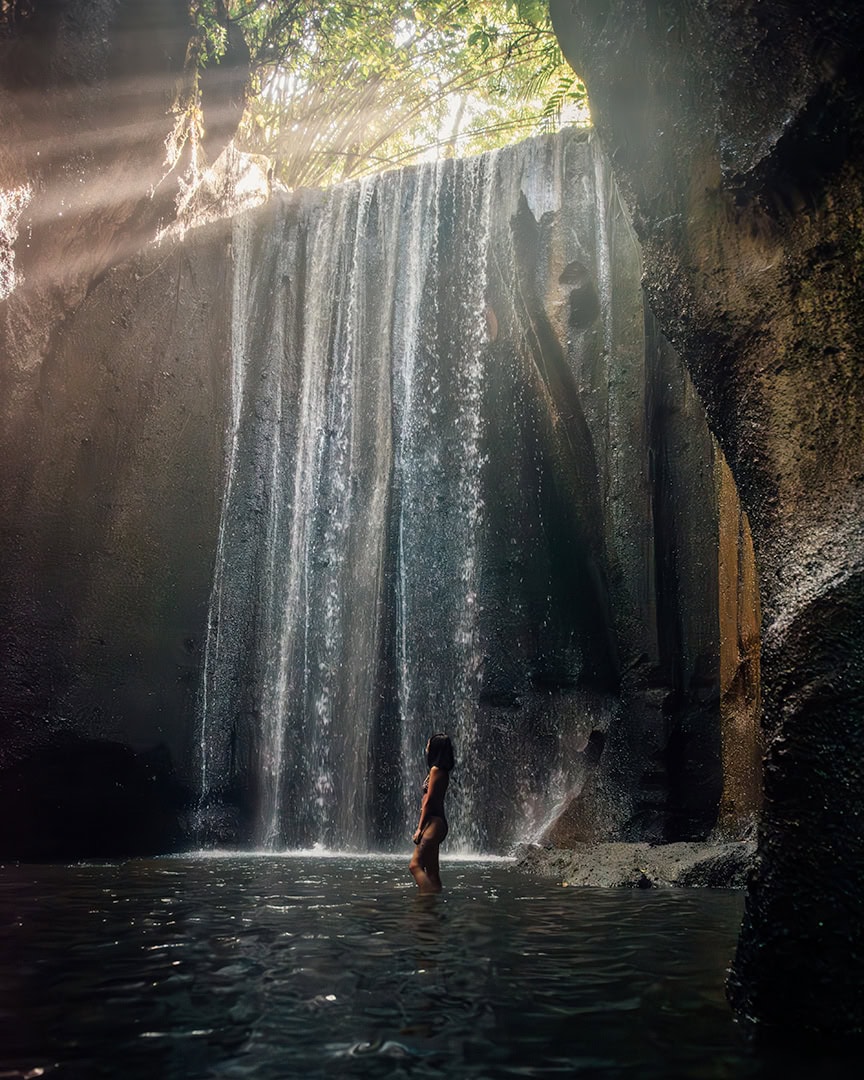
And honestly, for such a small island there’s a ridiculous amount to see. Waterfalls tucked into thick jungle, huge rice terraces carved into the hillsides, volcanoes rising up behind everything, and beaches where the jungle runs right down to the sea.
My trick for the popular spots is to get up early and go for sunrise. It’s a painful alarm, I won’t pretend otherwise, but you’ll have the place almost to yourself before the crowds arrive. Which in my opinion, is so worth it.
You can beat the crowds!
You’ll be pleased to know there are ways to experience Bali without feeling completely overwhelmed by the crowds.
Visiting during the shoulder season is one of my favourite ways to do this. May, June and September are great options because you’ll still get the benefits of the dry season, but without the peak July and August crowds.
And if you’re travelling without kids, this is one of the biggest advantages as you’re not tied to school holidays. Being able to visit outside the busiest months means you can enjoy lower prices, quieter attractions and a much more relaxed experience.
Of course, Bali is popular for a reason, so you won’t have every beach or waterfall completely to yourself. But with a little planning, you can avoid the worst of the crowds and see a much calmer side of the island.

Easy to travel to other islands
One of my favourite things about visiting Bali is that you’re not limited to just Bali.
Indonesia is made up of over 17,000 islands, and Bali makes a great base for exploring some of the incredible islands nearby. So if the busier areas start to feel a bit much, you can easily swap beach clubs and traffic for quieter beaches, snorkelling spots and a much slower pace of life.
The Nusa Islands are the easiest place to start, just a short boat ride from Bali. Nusa Lembongan and Nusa Ceningan have a more relaxed island feel, while Nusa Penida is the largest and most rugged of the three (it’s also my personal favourite).
The Gili Islands are another popular option, around an hour and a half away by boat. Each island has a different vibe: Gili T is known for nightlife and diving, Gili Air has a more laid-back social atmosphere, and Gili Meno is the quietest of the three if you’re looking for somewhere a little slower.
In about an hour and twenty minutes, you can also reach Bali’s neighbour, Lombok. If you ever want to know what Bali was like twenty years ago, before the tourist boom, then Lombok will give you a pretty good idea!

The International Community
One thing you’ll notice pretty quickly in Bali is that there’s a huge international community living and travelling here.
For some people, this is one of the island’s biggest draws. Bali has become a hub for digital nomads, creatives and long-term travellers, which means there are endless cafés to work from, communities to join and plenty of opportunities to meet people from all over the world.
If you’re travelling solo, this can be a really easy place to make friends, and even if you’re not, it’s nice knowing there’s always somewhere to chat with other travellers over a coffee (or a smoothie bowl, because this is Bali after all).
The downside is that this has also changed the feel of some areas. Places like Canggu and Seminyak have become increasingly shaped around tourism and the international community, with some parts feeling very different from traditional Balinese life.
Whether that’s a good thing or a bad thing really depends on what you’re looking for. Some people love the convenience and social side of it, while others come to Bali hoping for a more local experience.
Amazing food
Last but by no means least, let’s talk about the amazing food you will find in Bali.
As I mentioned earlier, cafe culture is huge here and you will find tons of places that serve great coffee, smoothie bowls and health conscious food. In the busier locations, you will find a whole array of tasty cuisines from all around the globe, meaning there is something for everyone.
Local Balinese food has some of the best flavours, with Gado Gado being my absolute favourite dish! Warungs are perfect for anyone searching for some local food, where you’ll find massive flavoursome dishes for just a few dollars.
I also found a lot of places that made it very easy if you have dietary requirements. As a vegan who is gluten-free, finding dishes that I can eat can be a bit of a challenge, but in Bali, I don’t think this was ever even an issue for me. There are tons of vegan-friendly restaurants around the island!
I am aware that a lot of Indonesian dishes may come into contact with peanuts, so this is something nut allergy sufferers need to be aware of, however.

Where To Stay In Bali
A huge factor in the type of trip you will take to Bali is where you choose to stay. You may wish to stay away from the hustle and bustle of the busier areas or you may wish to stay in the thick of it. If you’re travelling as a couple or on your honeymoon, the quieter spots (like the Sidemen bamboo houses or the beaches of Amed) are hard to beat for a bit of romance away from the crowds all.
Something that makes Bali worth visiting is that it is easy to have a bit of both. Each time I visit, I will usually start in the busier areas for a few days before moving my way around the more relaxed parts of the island.
Below, I have listed the best places for you to visit on your Bali holiday depending on your preference.

Is Bali Worth Visiting? FAQs
Is Bali still worth visiting in 2026?
Yes, in my opinion, Bali is definitely still worth visiting. You just need to manage your expectations and be willing to look beyond the busiest areas, as some parts of the island have changed a lot over the years.
Is Bali overrated?
The hotspots like Kuta, Canggu and Seminyak can feel crowded, but head north or east, and there’s still loads of unspoilt beauty that lives up to the hype.
How do you avoid the crowds in Bali?
Visit in the shoulder season (May, June or September), skip the busiest towns, and get to popular spots early in the morning or at sunrise.
Is Bali expensive?
The hotspots have got pricey, but venture to quieter northern and eastern areas, and you’ll still find affordable stays and warungs where a meal is just a few pounds.
Is Bali good for a couples or honeymoon trip?
Absolutely, the quieter areas like Sidemen (with its bamboo houses) and Amed are gorgeous and romantic, well away from the busier party towns.
So, Should You Visit Bali?
My honest opinion? Yes, go. There’s still so much beauty, culture and genuinely incredible scenery, you just want to go in knowing what to expect rather than just what you’ve seen on Instagram.
And for what it’s worth, Bali will absolutely still be on my list next time I’m heading back to Asia. I’ve been back so many times already, and I’d happily go again tomorrow.
Whether you’re after beach clubs, surfing and cafe culture, or you’d rather be chasing waterfalls, temples and the quieter corners of the island, it’s all still there. You’ve just got to be a bit more intentional about where you spend your time.
The best time to visit Bali really depends on what matters most to you, whether that’s dry weather, thinner crowds, cheaper prices or the right conditions for diving and surfing.
So yes, Bali has changed. It hasn’t stopped being worth it.