
Best Time to Visit Bali: Weather, Costs & Crowds


Trying to work out the best time to visit Bali? I get it. Choosing the wrong month could mean paying more, battling bigger crowds or getting caught in the rainy season.
I’ve visited Bali in April, July, August and September over the years, so I’ve experienced both the busy peak season and the quieter shoulder months.
The short answer? The dry season (April to October) is the best time to visit Bali. You’ll generally get warm, sunny weather that’s perfect for beaches, waterfalls and exploring the island.
That said, if you’ve got the flexibility to choose, I’d personally visit during the shoulder months of April, May, September or October. You still get the benefits of the dry season, but with fewer crowds, better availability and, in many cases, lower prices. September is hands down my favourite month to visit.
That said, I wouldn’t rule out the rainy season completely. Bali stays warm all year, and the rain is usually short and heavy rather than lasting all day. If you’re happy with the odd downpour in exchange for fewer crowds and cheaper prices, it’s still well worth considering.
In this guide, I’ll break down what to expect throughout the year, including the weather, crowds, prices and the best time to visit based on the kind of trip you’re planning.

Seasons in Bali
Bali’s pretty straightforward when it comes to weather, and you’ve got two seasons to work with: wet and dry. That’s it. No confusing climate charts, just sunshine or showers. And the best part? It’s pretty much always warm, no matter when you visit.
Here, I break down what each season’s actually like, so you know exactly what you’re signing up for.
Wet Season: What to Know Before You Go
Depending on who you ask, Bali’s wet season usually falls between November and March (though some say it’s more like October to April).
I’ve been in April before, and we actually had barely any rain. It might’ve just been pure luck or that this is the shoulder season, but it shows you can still have a great trip at this time.
Just because it’s wet season doesn’t mean it’s raining 24/7. You can still get plenty of sunshine and warm days. Even when it does rain, it’s usually a tropical downpour, which is heavy but over before you know it, and you’ll be back to sipping on a Bintang at the beach in no time.
Speaking of beaches, this is also the time of year when you might see a lot more rubbish washed up on the shore. It’s pretty common, unfortunately, but the good news is there are loads of organised beach clean-ups you can join if you fancy pitching in.
As someone who gets eaten alive by mosquitoes, these have to be the shittest part of the wet season. They love water and thrive when there is lots of rain, so pack the bug spray or risk becoming an all-you-can-eat buffet.
As well as still having some nice days, there’s another upside to visiting during these months: hotels are cheaper. Like, way cheaper. So if you’re doing Bali on a budget, the wet season can save you a decent chunk of money. It’s also quieter, so you’ll have fewer crowds to battle with too.

Dry Season: Why Everyone Loves It
Dry season is when everyone wants to be in Bali, and honestly, I can understand the hype.
It usually runs from April to October. It’s less humid, the days are sunny, and you’re way less likely to get caught in a random downpour halfway through your scooter ride.
The catch (and there’s always a catch), it’s busier. A lot busier.
June, July and August are peak months, so expect bigger crowds, higher prices and traffic that’s even worse than usual (and Bali traffic’s not exactly a breeze at the best of times!).
If you leave booking accommodation to the last minute, you’ll probably end up paying more for whatever’s left (and it probably won’t be worth it). I usually plan months ahead, and it’s never been an issue.
I’ve done high season a few times and I still really love it, but you do have to be a bit clever. Get up early if you want to dodge the crowds or visit any big sights, otherwise, you’ll be spending half your day queuing just to get 30 seconds for a photo in front of a waterfall.
If you want all the best bits of the dry season without feeling like you’re fighting for space on the beach, the shoulder months are your best bet: April, May, September and October.
The weather’s still decent (maybe the odd shower, nothing tragic), but it’s quieter, and prices are better too.

Weather in Bali: What to Expect Year-Round
Bali’s warm pretty much all year, whether you’re here in the wet season or the dry season. Even when it’s raining, it’s warm and sticky thanks to the extra humidity (not so great if you’ve got frizzy hair like mine!).
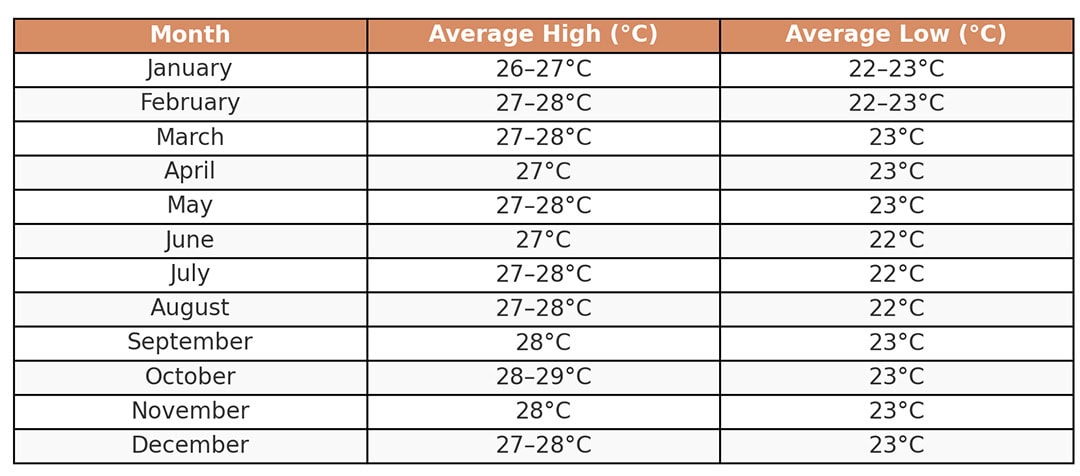
The temperature doesn’t actually change much from month to month, it’s usually somewhere around 26–29°C during the day and doesn’t drop much at night. So you won’t need a jumper unless you’re planning on heading into the mountain towns.
Just pack light, breathable clothes, swimwear, and maybe a light rain jacket if you’re coming in the wet season.
Average Monthly Temperatures in Bali
Bali’s temperatures don’t change much throughout the year, usually between 26–28 °C (79–82 °F) for daily highs, and 22–24 °C (72–75 °F) at night.
When’s the Busiest Time to Visit Bali?
You’ve probably guessed by now that the crowds get pretty wild during the peak of the dry season: June, July and August.
Some people actually love it when Bali’s this busy, I did when I was a solo traveller, as it was super easy to meet people. The beach towns like Canggu, Seminyak and Uluwatu feel extra buzzy, and there’s always something going on.
But if crowded bars and packed cafés sound like your idea of hell, don’t worry, there are still quieter corners, even in peak season.
You can head over to the east coast town of Amed, chill out up north in Lovina, breathe in the mountain mist in Munduk, or escape to the peaceful rice fields of Sidemen, tucked in the shadow of Mount Agung.

Visiting Bali Without Kids: The Best Time to Go
One of the best perks of travelling without kids is not being tied to school holidays, and honestly, it can make a huge difference in Bali.
The busiest (and usually most expensive) months are June, July and August, which just happen to line up with the UK summer holidays. If you can travel outside of those dates, you’ll avoid the biggest crowds, have more choice with accommodation and usually get much better prices too.
September is probably my favourite time to visit. The summer holiday crowds have disappeared, the weather is still great, and prices tend to drop a bit.
April, May and October are also great options, just keep an eye on UK half terms and Easter if you’re trying to avoid the busiest periods.
Being able to pick when you travel is honestly one of the biggest perks, so if you’ve got that flexibility, make the most of it.
When to Visit Bali FAQs
When’s The Cheapest Time to Visit Bali?
Wet season’s your friend if you’re on a budget, October/November through to March/April is when prices drop.
Just watch out for Christmas and New Year though, loads of people still head over for the holidays, so prices usually bump up then.
What’s The Best Month to Visit Bali?
Honestly, it depends on what you’re after, but if I had to pick, September is such a good shout.
When’s The Quietest Time to Visit Bali?
February, March, October and November are some of the quietest times to visit Bali.
Is the wet season worth visiting Bali?
If you’re on a budget, absolutely. Prices drop, it’s quieter, and the rain usually comes in short tropical bursts rather than all-day downpours, so you still get plenty of sunny beach time between them.

So, When Should You Visit Bali?
So, when should you actually book that flight? Honestly, there’s no bad time to visit Bali, but it really comes down to what you’re after.
If sunshine and blue skies are your non-negotiable, then the dry season is your safest bet. If you’d rather dodge the crowds (and keep a bit more money for beach club cocktails), the shoulder months are a brilliant balance. September’s my go-to, but April, May and October are great options too.
If you’re travelling on a tight budget, don’t write off the wet season. Sure, you might get caught in a downpour or two, but the deals can be really worth it. Just pack some bug spray for the mozzies!
So once you’ve picked your dates, the next thing to sort is where to go and what to actually do while you’re there.
That’s exactly what my 10-day Bali itinerary is for, it walks you through my favourite spots around the island and how to tie them all together, so you can spend less time planning and more time getting excited for your trip.