Iceland in July: Everything You Need To Know 2026


Thinking about visiting Iceland in July but worried it’ll be too busy, too pricey, or just… too much? I had the exact same panic before we went. Then James and I spent 8 days driving the full Ring Road in July, and it actually ended up being one of my favourite trips ever!
I spent months planning our route, figuring out which stops were actually worth the hype, which ones were skippable, and how to make the most of the long, midnight-sun days.
July might be the most popular (and yep, most expensive) month to visit, but there’s a reason so many people pick it. The weather’s kinder, the roads are easier, and you can squeeze in way more than in any other season.
Whether it’s your first trip to Iceland or you’re just trying to plan smart around crowds and daylight, this guide breaks down exactly what Iceland in July is really like, the best places to visit, what to expect, and the things I wish I’d known before we set off.
From how warm it actually gets to which stops are rammed by lunchtime, here’s everything you need to know before planning your July trip.
Plan Your Trip With My Favourite Resources
– Best Accommodation Site: Booking.com
– Book Day Tours Here: Viator
– Rent A Car Here: Discover Cars

Is July A Good Time To Visit Iceland?
So, is July a good time to visit Iceland? I’d say 100% yes!
It’s one of the busiest and most expensive months, sure, but with long daylight hours, good weather, and easy driving conditions, it’s a great time to explore. We loved having almost 24 hours of light to play with, as it meant we could visit waterfalls super early in the morning and have them pretty much all to ourselves.
July’s also when the lupins are in full bloom, which adds even more colour to those already unreal landscapes. And if you’re planning a family trip, it’s a solid time to go as the roads are easier, and there’s so much to do outdoors.

What’s The Weather Like In July?
July is one of the best months for weather in Iceland, which is a big part of why it’s such a popular time to visit. But even in summer, Iceland likes to keep you on your toes!
During our trip, we had sunshine, wind, and rain all on the same day. So while it’s definitely milder than the rest of the year, you’ll still want to pack for all seasons. Temperatures usually sit between 10–15°C (50–59°F), though it can occasionally reach somewhere around 20°C.
Nights are cooler, especially if you’re out late enjoying the midnight sun, so a warm coat is still a must. And since rain is always a possibility (on average, it rains about 10 days in July), a waterproof jacket and layers will go a long way.
The bonus? With nearly 24 hours of daylight, you’ve got plenty of time to wait out the showers and keep exploring.

Best Things To Do In Iceland In July
There’s plenty to see and do in Iceland all year round, but July really opens up more options, especially if you’re into the outdoors.
With better weather and long daylight hours, it’s a great time for hiking, spotting wildlife like puffins and whales, and taking in the landscapes that Iceland is known for. We found there was always something to do, and it felt like we barely scratched the surface.
Experience The Midnight Sun
While Iceland is famous for the northern lights in winter, July swaps that out for something just as special, the midnight sun. Even though the sun technically sets for a few hours, it never really gets dark. Instead, the sky glows with this soft, sunset-like light that lasts well into the night.
This was actually one of the main reasons I wanted to visit in July, and it didn’t disappoint!
We made the most of it by starting our days at 3am (yep, really), which meant we could visit popular spots without the usual crowds. We actually had some of the places entirely to ourselves, which would never happen during the daytime!
If you’re up for an early start or a late-night adventure, the extra daylight in July gives you way more flexibility to explore at your own pace.

Visit The Highlands
Iceland’s highlands are one of those rare places that still feel truly wild, and they’re only accessible for a few months each year, which makes visiting in summer pretty special.
Landmannalaugar, Langjökull Glacier, Askja, Hveradalir, and Hveravellir are all worth adding to your list. Landmannalaugar’s colourful mountains and natural hot springs are like something from another planet, while Langjökull is the place to go for ice caves and snowmobiling.
If you’re after something more remote, Askja’s craters and deep blue lake are incredible. Hveradalir and Hveravellir are also great for geothermal landscapes and that proper off-grid feel.
You can drive to some of these spots yourself, but if you’re not confident on F-roads or travelling solo, joining a tour is probably the easier (and safer) option.

Go Hiking
One of my favourite hikes from our trip was Stuðlagil Canyon in East Iceland. It’s a 2–3 hour return walk, and the basalt cliffs and bright blue river made it one of the most impressive spots we saw. It’s a bit more out of the way, which meant fewer crowds too.
There are plenty of other great hikes across Iceland. Near Reykjavik, Mount Esja offers a few different trails and takes around 2–4 hours, with great views over the city. The Glymur Waterfall hike is a bit more challenging but rewarding, about 3 to 4 hours round trip to Iceland’s second-highest waterfall.
In Skaftafell, the Svartifoss trail is a shorter option (1.5–2 hours) and takes you to a waterfall framed by basalt columns.
And for a real challenge, the Laugavegur Trail is Iceland’s most iconic multi-day hike, taking 3 to 5 days through colourful mountains and hot spring valleys.
You can hike it independently if you’re experienced, or go with a guided group if you’d prefer some support along the way.

Explore The Glaciers
Exploring Iceland’s glaciers in July is a really fun way to spend the day. Summer is when the ice giants like Vatnajökull, Europe’s largest glacier, and Langjökull with its awesome ice caves look even more impressive against the blue summer sky (when it’s not raining anyway!).
But, and this is a big but, wandering onto a glacier on your own is an absolute no-go. These huge rivers of ice aren’t just beautiful – they’re always on the move and are very dangerous. That’s where guided tours come in, they’re the key to safely exploring these icy wonders.
On these tours, you get all geared up with crampons and follow a guide who knows their stuff. They’ll lead you through some incredible ice formations and fill you in on all the cool glacier facts. Plus, they know all the best spots for you to get some epic glacier shots.

See The Puffins
If seeing puffins is high on your Iceland bucket list, July is a great time to visit. You can usually spot them from April through September, but summer is peak season.
One of the best places to see them is the Westman Islands, especially Heimaey, which is home to the largest puffin colony in the world. You’ll need to catch a ferry to get there, but it’s well worth it, and there’s plenty to do on the island once you arrive.
Látrabjarg in the Westfjords is another top spot. It’s one of Europe’s biggest bird cliffs and a real haven for puffins. Just be sure to stay a safe distance from the edge and respect the birds’ space.
We saw puffins nesting along the cliffs at Dyrhólaey when we stopped there on our way to Vík. It’s a great place to see them up close during the summer months, and Reynisfjara beach is just around the corner, so it’s easy to combine the two in one stop.
And if you’re heading up north, the Tjörnes peninsula is also worth a visit. There’s a viewing platform at Hringsbjarg cliff that gives you a good chance of spotting them in that region too.
If you’re in Reykjavik, you can catch a boat tour to see the puffins at either Akurey, Engey or Lundey.

Snorkel Between Two Tectonic Plates
Not many people can say they’ve snorkelled between two tectonic plates, but in Iceland’s Silfra fissure, that’s exactly what you’ll be doing!
Located in the stunning Þingvellir National Park, Silfra is a mesmerising underwater canyon that lies right between the North American and Eurasian tectonic plates. When you’re snorkelling here, you’re literally floating between two continents!
The water in Silfra is known to be some of the clearest in the world and offers over 100 meters of underwater visibility. The water clarity reveals a breathtaking world of deep blues, fascinating rock formations, and some of the purest waters you’ll ever encounter.
The meltwater from Langjökull glacier, filtered through porous underground lava for decades, reaches Silfra as incredibly pure, drinkable water. The water temperature hovers around 2-4°C (35-39°F) year-round, but don’t let that hold you back. Silfra Fissure Tours will provide you with a dry suit that keeps you warm(ish!) and, well, dry!
Relax In A Natural Hot Spring
You can visit Iceland’s hot springs all year round, but July is a great time to soak in these relaxing pools. The geothermal pools, heated by the island’s volcanic activity, are scattered all across the country.
Whether you’re looking for a luxurious spa-like soak or a rustic dip in a natural setting, Iceland’s hot springs have something for everyone. Here’s a look at some of the most popular ones:
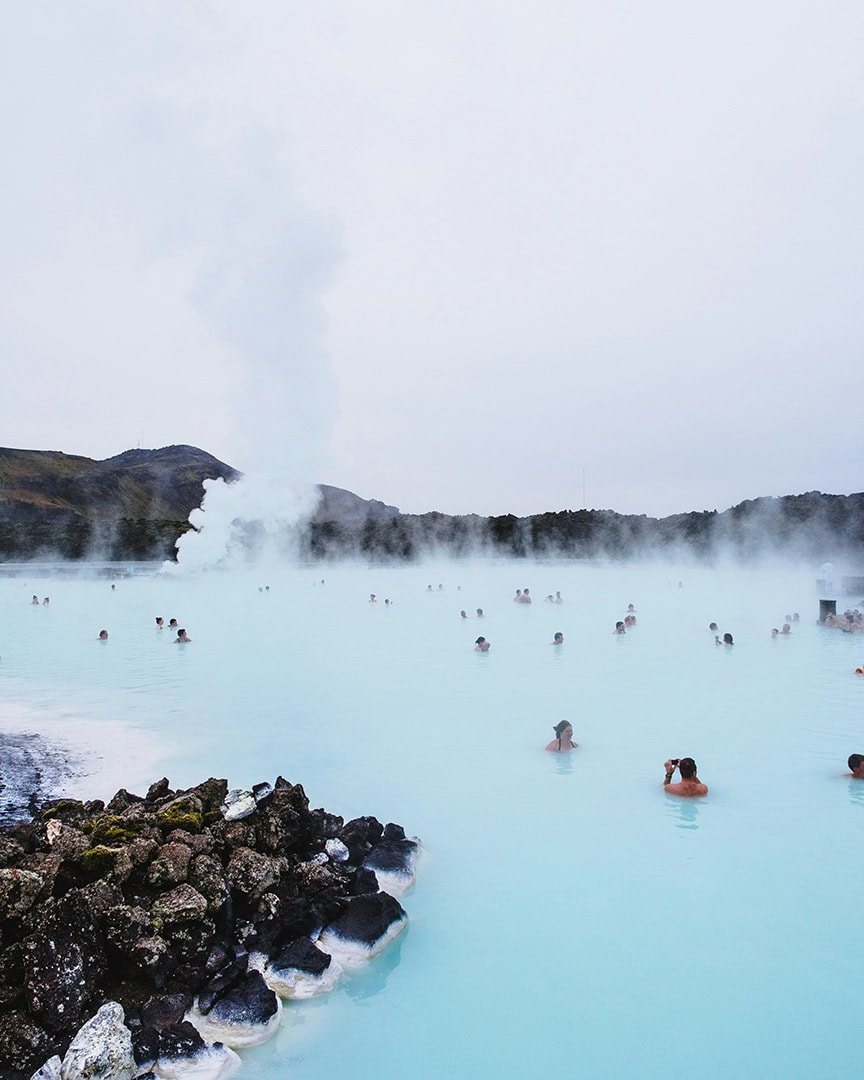
- Blue Lagoon: This is the most popular and touristic of Icelandic hot springs and is set in a lava field near Grindavík. Famous for its milky blue waters, which are super good for your skin.
- Sky Lagoon: This one’s a newbie in Reykjavik, and it has some awesome ocean views. It’s a great alternative to the more expensive Blue Lagoon. (I’ve written a detailed post on Blue Lagoon and Sky Lagoon to help you decide which you would prefer.)
- Secret Lagoon: Hidden away in Flúðir, this is one of Iceland’s oldest geothermal pools. It’s less touristy than the Blue Lagoon and is a great spot to end the day after exploring the Golden Circle.
- Hrunalaug: If you’re after something small and off-the-beaten-path, this hot spring near Flúðir is a gem.
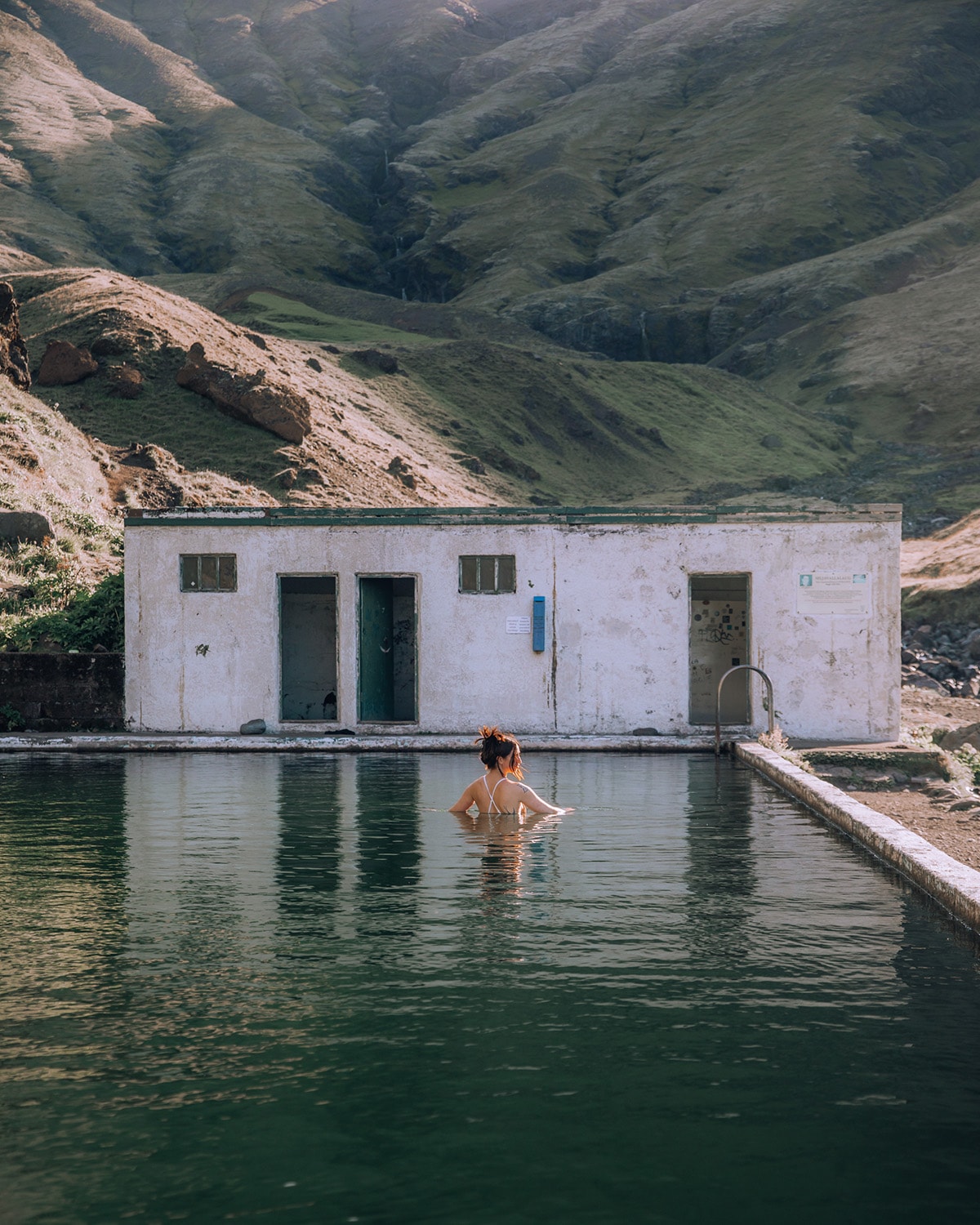
- Seljavallalaug: Nestled in a valley near Skogafoss, this old pool is a half-hour hike, but the scenery is 100% Instagram-worthy.
- Reykjadalur Steam Valley: Near Hveragerði, this place lets you bathe in naturally warm streams. The 1 – 1.5 hour hike (one way) through the steamy valley is half the fun.
- Lake Mývatn Nature Bath: Often called the ‘Blue Lagoon of the North’, this spot up north offers mineral-rich waters and some pretty epic views over Lake Mývatn.

Go Whale Watching
Just like with puffins, July is right in the middle of whale season, so if seeing whales is high on your list, this is the time to go. Husavík and Reykjavík are two of the best spots to join a whale-watching tour, and both have a good chance of sightings.
Husavík is known as Iceland’s whale-watching capital, and the views across Skjálfandi Bay are incredible. We actually saw a whale from the shore while we were there, which was pretty awesome!
Reykjavik is another great option if you’re short on time or staying close to the city, with plenty of tours that head out into Faxaflói Bay.
Out on the water, you might spot humpbacks, minkes, dolphins, and even the occasional orca if you’re lucky. Seals are often hanging about too, so there’s always something to keep an eye out for.
If you’re booking a tour, I’d recommend choosing one that follows responsible wildlife guidelines. Look for operators who keep a respectful distance and avoid disturbing the whales’ natural behaviour, like this responsible whale watching experience in Reykjavík we loved.
These are the tours I recommend around Iceland:
- Reykjavik Whale Watching Tour – this is the tour I actually went on in March.
- Húsavík: Whale Watching on a Carbon-Neutral Oak Boat
- Árskógssandur: Whale-Watching Boat Trip

Explore The West Fjords
The Westfjords are one of Iceland’s most remote and dramatic regions, with steep mountains, deep fjords, and rugged coastlines. Because it’s a bit more off the beaten path, July is a great time to visit when the roads are clear of snow and ice, making them easier to navigate.
The Hornstrandir Nature Reserve is a highlight if you’re into hiking and wildlife, as it’s one of the best places to spot Arctic foxes. The area’s also known for its hot springs, like the sea-facing tubs at Drangsnes, which are perfect for a quiet soak with a view.
And if you’re passing through Hólmavík, there’s a quirky little Museum of Witchcraft and Sorcery that’s worth a stop.

What To Wear In July
Even in summer, packing for Iceland takes a bit of planning. The weather can change quickly, so it’s best to be ready for anything, from sunshine to sudden rain (or both in the same hour).
Layers are your best friend here and will make all the difference when you’re out exploring. Here’s a quick breakdown of what I’d recommend bringing:
- Waterproof Jacket: Essential for those frequent rain showers and handy when visiting misty waterfalls.
- Windproof Jacket: The Icelandic wind can be brisk, even in July, so a windproof jacket will help take the edge off.
- Warm Coat: For cooler evenings and early mornings, especially if you’re out exploring during the midnight sun.
- Warm Socks and Gloves: Even in summer, temperatures can drop, especially in the highlands or on boat tours.
- Swimwear: Don’t forget this for relaxing dips in hot springs or geothermal pools. I recommend bringing a couple of changes as they can take a while to dry.
- Comfortable Walking Boots: A must for hiking and walking on varied terrains, from city streets to rugged trails.

Driving In Iceland In July
If you’re renting a car, you’ll be pleased to know that driving in Iceland is much easier during the summer months, and July is no exception to this.
The roads are in much better shape and free from the winter ice and snow, which will make your journey smoother. You won’t have to worry too much about road closures either, as for the most part, the summer weather keeps things pretty accessible.
July is also the time when the F roads to the highlands are open. If you’re feeling adventurous and have rented a 4×4, these routes are a unique way to see the island. They lead you to some of the most stunning and less-travelled parts of Iceland.
The weather can be a bit of a wildcard in the highlands, even in the summer, so it’s good to have a plan B just in case.
An interesting rule that you’ll need to follow while driving in Iceland is that you must keep your headlights on at all times! As strange as this may sound, we found it helpful to have a note on the dashboard to remind us to turn our lights on before driving.
Check the roads before starting each leg of your journey at road.is, safe.is and vedur.is.
Driving The Ring Road
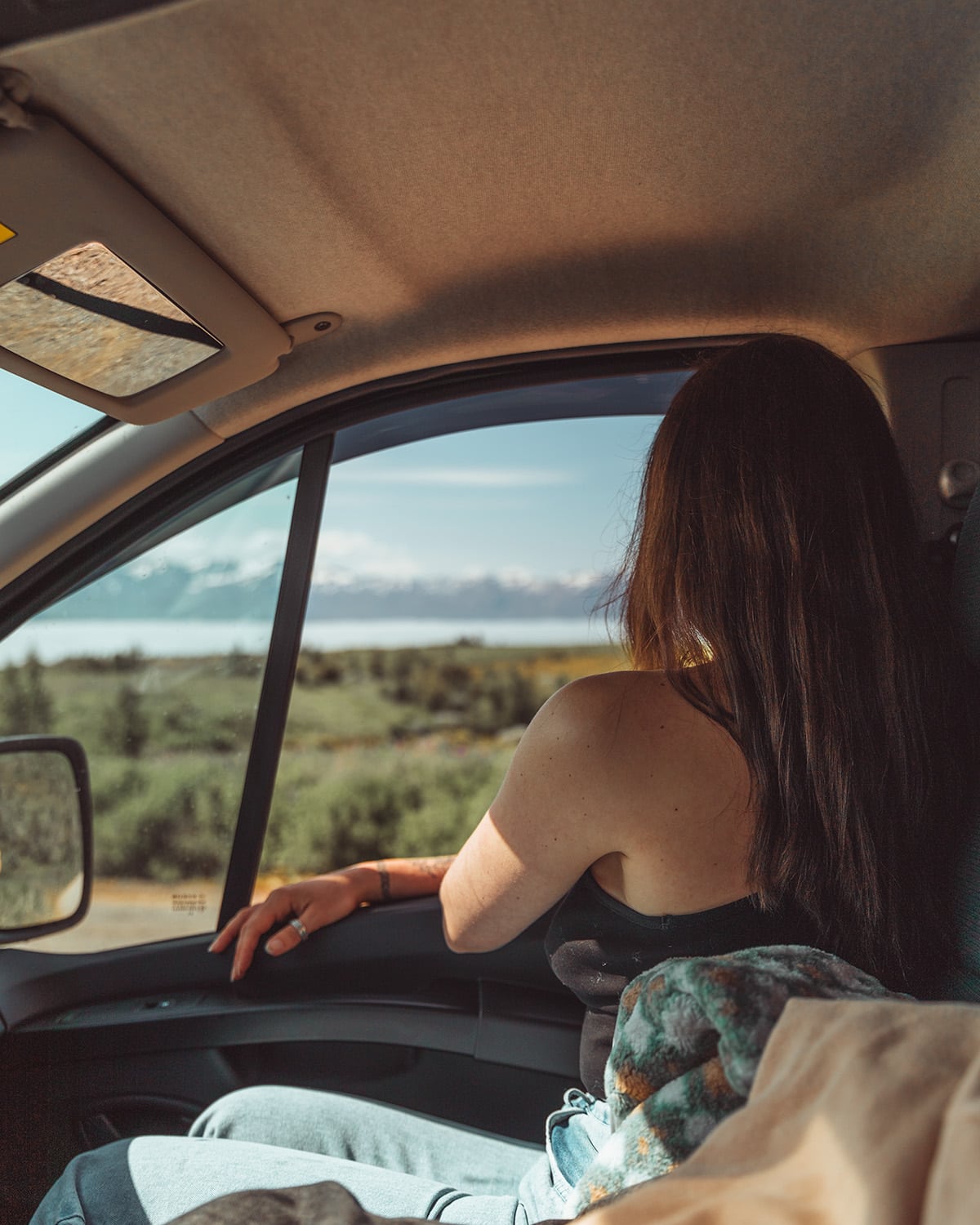
We drove the Ring Road in July, and this was such an awesome way to see all the diverse landscapes in Iceland.
With the clearer roads and the summer weather in your favour, you’ll find the drive should be pretty straightforward. The Ring Road is generally very well maintained, is clearly signposted, usually in English, and we found it easy to follow.
To be able to really soak in some of the best stops along the Ring Road, you’ll need at least 6 to 7 days. However, if you’ve got the time, I recommend stretching your trip to anywhere between 8 – 14 days so you can detour to hidden gems and spend more time at each location.
If you’re pressed for time, then a great alternative is exploring the South Coast. This stretch of road still packs a punch with its stunning waterfalls, sprawling glaciers and the iconic Diamond Beach.
It’s perfect for those who have about 3 to 5 days but still want to experience the magic of Iceland.

Cons Of Visiting Iceland In Summer
Now I think visiting Iceland in July is great and, honestly, this was the best time for us to visit for what we wanted to do. But there are a few downsides to consider when deciding if this is the right time for you to visit.
First off, it’s the peak of tourist season, which means everything from flights to accommodations and car rentals can get pretty pricey, and Iceland isn’t cheap to start with. There are ways around this, such as booking in advance, swapping hotels for camping and cooking your own meals.
With the high season comes larger crowds, so some of Iceland’s popular sights can get pretty busy. We got around this by starting our days really early, which meant we often had places to ourselves before the rush, and it worked well for us.
But if you’re not a fan of early starts or navigating crowds, visiting in the shoulder season might be a better fit. I’ve also been in March, and while the weather was colder, it was much quieter and definitely more budget-friendly (but still not cheap!).
Another thing to keep in mind is that the never-ending daylight of the Icelandic summer means you won’t get to see the Northern Lights. They’re a no-show due to the midnight sun, so if catching this is high on your list, July will be the worst time to visit. You’ll need to consider a different time of year, between September and April.

Final Thoughts: Iceland in July: Everything You Need To Know 2026
I think it’s probably pretty clear by now that I’m a big fan of visiting Iceland in July.
This is the time of year when you can really make the most of your days, whether you’re wandering around Reykjavik, heading out on a whale watching tour, or hiking across glaciers. Yes, it’s peak season, and things are definitely a bit busier (and pricier), but for me, the trade-offs were worth it.
The midnight sun gives you so much freedom to explore, and the weather was the best I’ve experienced in Iceland so far. We beat the crowds by starting early most days, and that made a huge difference.
If you’re up for long days filled with epic landscapes, waterfalls, and the chance to wind down in a hot spring after a full day out exploring, then July is a great time to go. Just plan ahead, pack smart, and enjoy every minute of that Icelandic summer magic.