This 5-Day Road Trip Is Proof You Don’t Need Weeks to Experience One of Europe’s Wildest Destinations


Iceland is hands down one of the best places for a road trip, and if you’re short on time, this 5-day itinerary along the south coast is the best way to spend your time here!
You won’t have enough days to do the full Ring Road, but you’ll still see plenty of the country’s bucket list spots. Volcanoes, glaciers, waterfalls, hot springs, basically all the good stuff packed into one route.
When we went in summer, the midnight sun gave us 24 hours of daylight. We were often out the door by 3 a.m. to catch the best spots before the crowds showed up (don’t worry, the early wake-up calls aren’t essential!).
You’ll need to rent a car or camper van for this one, but I think it’s the best way to explore Iceland anyway.
Iceland South Coast Road Trip Map
Is 5 Days Enough To See Iceland?
Well, the answer to this is yes and no.
Five days in Iceland is definitely enough time to explore a lot of the south coast! With glaciers, lava fields, hot springs, and waterfalls, you’ll still get to experience plenty of otherworldly landscapes.
That said, if you’re planning to drive the entire Ring Road, five days won’t be enough.
While it’s technically possible to cover the Ring Road in about 22 hours of driving, you’d miss so many amazing stops along the way, and honestly, the journey wouldn’t be nearly as enjoyable.
Not to mention, all that driving would leave you absolutely shattered! If you do have more time, I’ve also written about our 8 day ring road itinerary.
Day 1 Reykjavik to Skogafoss
Total Drive Time: 2.5 Hours
On the first day of your Iceland itinerary, I recommend trying to book an early flight if possible, as most rental companies open at around 9 am, which will give you a good head start!
We skipped Reykjavik at the start of this trip as we wanted to get straight on the road, but we did spend a night here at the end of our trip.
Reykjanes Peninsula
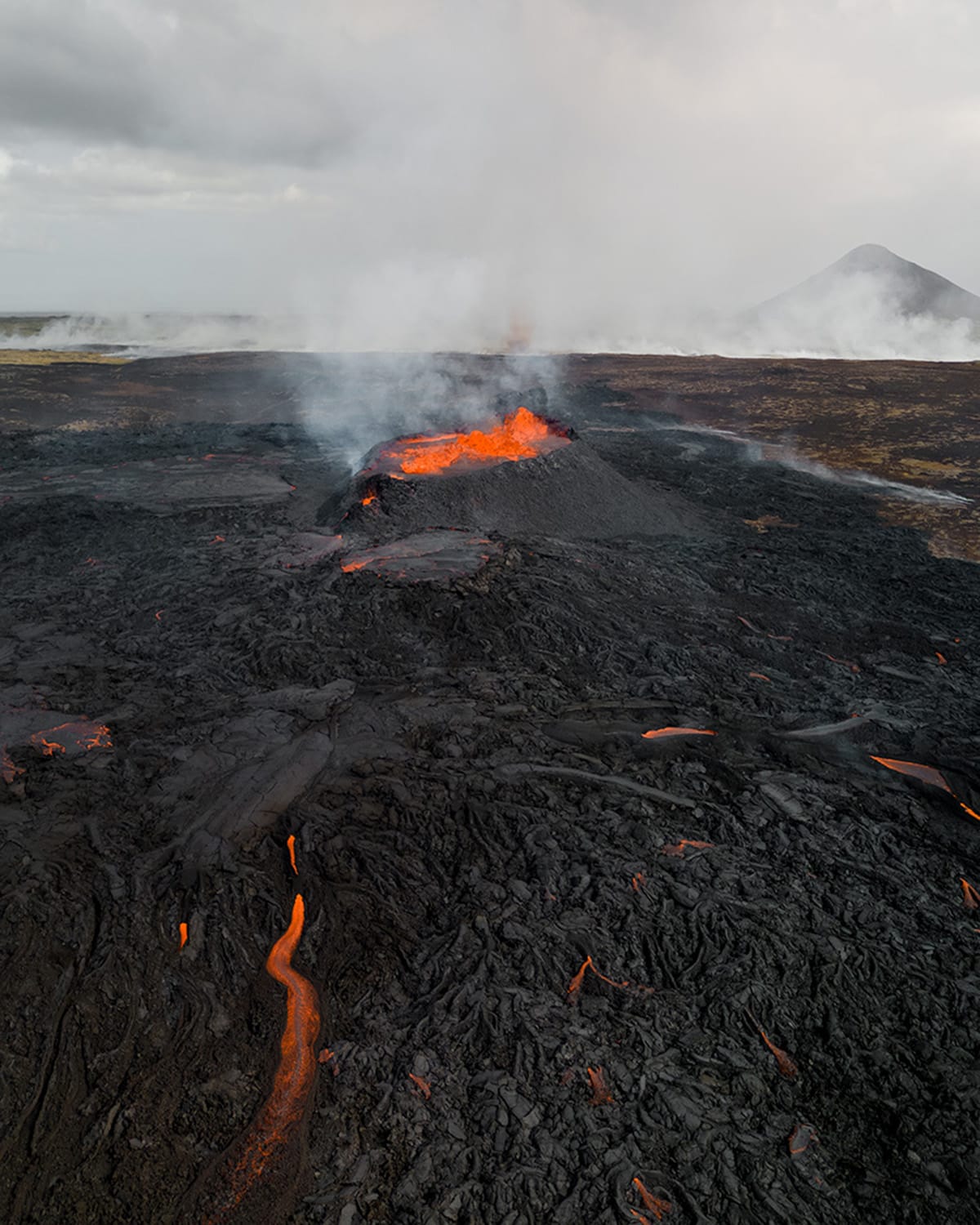
The first stop is the Reykjanes Peninsula which is found on the southwestern tip of Iceland near Reykjavik. It’s somewhere that’s often overlooked by people heading straight to the Ring Road, but it really shouldn’t be.
This area is full of steaming geothermal fields, sprawling lava beds, and, in recent years, some pretty dramatic volcanic eruptions. We actually got to witness one of those eruptions in July 2023, before things unfortunately started to cause trouble for the nearby town of Grindavík.
The peninsula is also home to Kleifarvatn, Iceland’s largest lake, with dark volcanic shores and shimmering waters fed by underground springs.
Due to the recent eruptions in the area, you should always check safety advice at Visit Reykjanes and Safe Travel.
Seljalandsfoss
Whenever I think of Iceland, one of the first places I picture in my mind is the iconic Seljalandsfoss.
This is one of Iceland’s most visited waterfalls which you will find just off the main road. You won’t be able to miss it, and you’ll be able to notice it from a few miles away! It’s easily accessible and is just a few minutes walk from the car park.
What makes this waterfall unique is the path that leads behind the curtain of water. You’ll probably get soaked, but it’s a really cool perspective to see the waterfall from!
Gljufrabui
Just a short 10-minute walk from Seljalandsfoss is its neighbour, Gljufrabui.
This hidden waterfall is tucked between rock walls, and you’ll need to enter a small cave to see it up close. If you do decide to go in, I recommend bringing your waterproof jacket as you’ll definitely get wet from all the mist flying off the rocks.
My feet got soaked when I went into the cave, but if you don’t mind this, I definitely think it’s worth going in!

Where To Stay
Camping: Skogar Campsite
This is a campsite with a view! It’s located right next to the famous Skogafoss, and I mean right next to it, so you’ll be falling asleep to the sound of cascading water.
The campsite is basic, and you do need to pay 400ISK to use the shower, but what it lacks in facilities, I think it makes up for in scenery!
Accommodation: Hotel Skogafoss
So the name is probably a giveaway, but Hotel Skogafoss is also located very close to the waterfall. It’s a great location to stay for your first few stops in the morning.
Day 2 Skogafoss to Vik
Total Drive Time: 2 Hours
Skogafoss
If you choose to stay at the campsite or Hotel Skogafoss, your second day will begin at the famous Skogafoss waterfall.
Skogafoss’s towering rock face was once part of the southern coastline and has receded about 5 kilometres inland over time.
You can choose to climb the 370 steps to the top of these cliffs to view Skoagfoss from above, but personally, I loved the view from the bottom. The falls create a constant mist, and Skogafoss is often adorned in a colourful rainbow.
If you happen to visit during the summer months, you’ll also find a field of colourful lupins not far from the falls. This spot is great for a photo with the falls in the background.
Kvernufoss
Kvernufoss is a hidden gem that is tucked away not far from Skogafoss. The great thing about these falls is they are lesser-known and are nowhere near as busy as their famous neighbour. A short hike through moss-covered landscapes will lead you to the falls, which tumble down between a rocky canyon.
The return journey from the car park to Kvernufoss takes roughly 30 minutes and is predominantly flat.

Seljavallalaug Swimming Pool
Nestled at Eyjafjallajokull’s base lies Seljavallalaug, a geothermal pool from 1923. Originally for locals’ swimming lessons, it’s now a popular spot for people exploring the south coast.
This remote pool has a rustic charm and is tucked at the bottom of rugged mountains. Don’t be surprised if you find a lot of algae in the pool, it’s pretty normal for Iceland’s hot springs, but surprising if you’re not expecting it!
Honestly, the algae gave me the ick as it made the floor slippery. I still enjoyed my swim in the warm-ish water, but I don’t recommend wearing a white swimsuit! It didn’t stay very white for long!
The 25-minute rocky trail to the pool isn’t well-marked, but if you add the location in Google Maps, you’ll get an idea of the right direction to walk.
Solheimajokull Glacier
A quick detour from the main road will take you to the first glacier you will see on this trip!
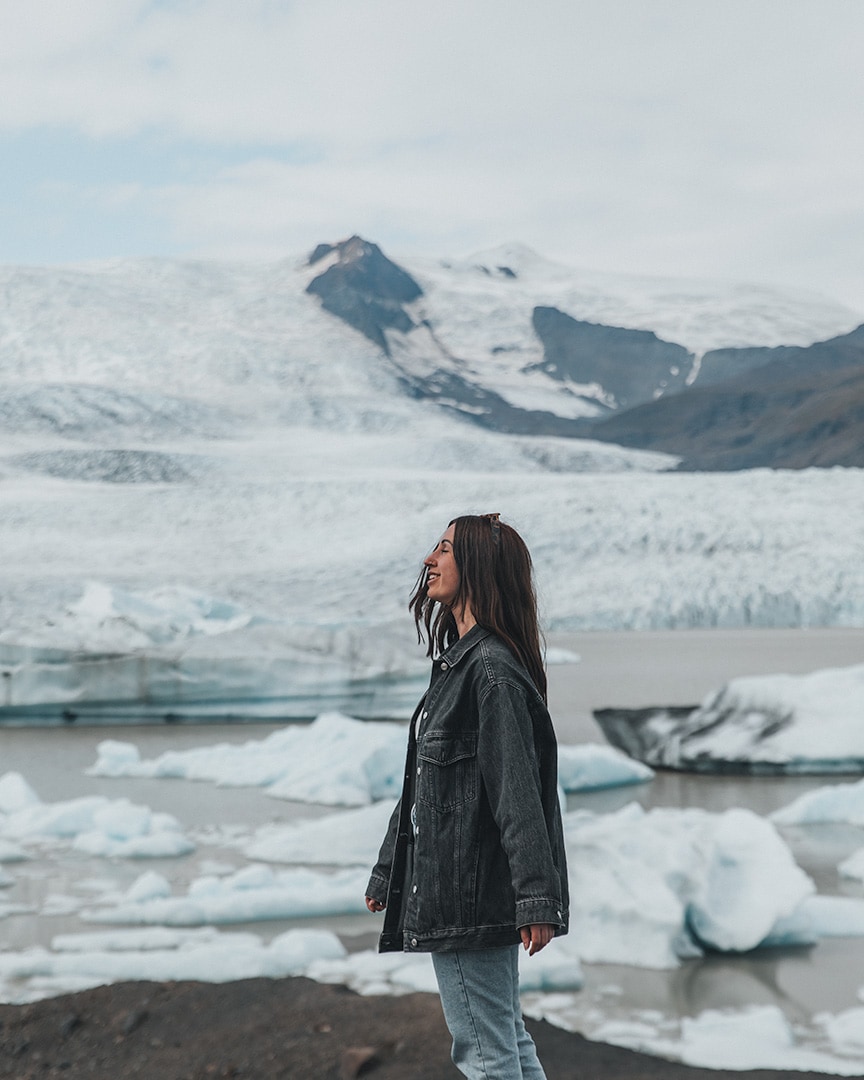
Solheimajokull glacier is found between Katla and Eyjafjallajökull volcanoes. The dark colour you’ll see woven through the ice is ash from previous volcanic eruptions!
Sadly, like all the glaciers, Solheimajokull is melting at a fast rate due to climate change and is receding further back toward the mountains.
You might wish to book a guided glacier hike while you’re here to see the glacier up close.
Dyrholaey Lighthouse
Perched atop the tall cliffs of the south coast, the Dyrhólaey Lighthouse has amazing views of the ocean and the black sandy beaches below.
The area is also known for its cool rock formations, especially the huge Dyrhólaey arch. It’s 120 meters tall and has been shaped by the sea over time.
During the summer months, it’s a popular spot for puffin sightings as they nest along the cliff’s edge.

Reynisfjara Black Sand Beach
Just a short drive from Dyrhólaey Lighthouse is the famous Reynisfjara Beach, known for its black sand and unusual hexagonal basalt columns. If it looks familiar, that’s because it was featured as Eastwatch-by-the-Sea in Game of Thrones!
Another thing that really catches your eye here is the Reynisdrangar sea stacks, which rise out of the ocean.
You do need to be careful while here. When we arrived at the car park, the warning signs about dangerous waves were hard to miss. There are sneaker waves that are powerful and unpredictable; they can pull you out to sea in seconds.
Sadly, people have lost their lives here in recent years, so try to visit at low tide and keep a safe distance from the water.
Vik
The charming town of Vik is the perfect place to stop for the night. Honestly, I fell in love with it, and it ended up being my favourite place to stay during our entire trip to Iceland.
If you’re a coffee lover, make sure you check out Skool Beans. It’s an old school bus that’s been turned into the quirkiest little coffee shop.
After a long day of driving, it’s the perfect spot to wind down with a seriously good cup of coffee (probably the best you’ll have on your 5 days in Iceland!). And they’ve got a friendly resident cat to keep you company, what more could you want?
Vik is also where you will find the Icelandic Lava Show, the only show in the world where you will see real flowing lava!
Where To Stay
Camping: Vik Campsite
This is the main campsite in Vik, and even though it’s no-frills, it’s in a great location and has all the amenities you need.
You do need to pay if you wish to use the shower, which isn’t unheard of in Iceland, but the thing that I found weird was the shared shower space! There’s no curtain or wall between the four showers! This genuinely didn’t bother me but I did find it a bit different from what I’m used to!
Hotel: Vik Cottages
Backed by the mossy cliffs of Iceland’s south coast, Vik Cottages are less than 500m from the black sand beach and are in a great location. These modern cabins provide spacious rooms, complete with WiFi and access to the hotel’s restaurant.
Day 3 Vik to Vatnajökull National Park
Total Drive Time: 3 Hours
Vik i Myrdal Church
Your first stop on Day 3 of this 5 day Iceland itinerary is just around the corner!
As you drove into Vik, you likely spotted the charming red and white church perched on a hill overlooking the town. This is Vik i Myrdal Church, and during the summer months, it’s surrounded by vibrant purple lupins!
It’s such a peaceful spot to visit, especially in the soft morning light, when the views are at their best.

Svinafellsjökull Glacier
The drive toward Vatnajökull National Park is where the landscape really begins to change! About half an hour before you reach Svinafellsjökull, you’ll notice glaciers popping up in every direction, dominating the landscape.
Svinafellsjökull Glacier is part of Vatnajökull, Europe’s largest ice cap, and it’s the perfect spot to see a glacier tongue up close. It’s an easy 15-minute walk from the car park, although there are some loose rocks which I soon found out can be pretty slippery!
When you reach the glacier lagoon, you’ll see icebergs that have broken off the ice wall floating in the water. If you listen carefully, you can hear the eerie creaks and groans of the ice shifting.
This is also a popular spot for glacier hikes, where you can walk across those striking electric-blue rivers of ice!
Fjallsarlon Glacier Viewpoint
The Fjallsarlon Glacier Viewpoint isn’t as well signposted as some of the other sights on this journey, and if you blink, you could miss it!
I must admit, I really didn’t expect much from this viewpoint for some reason, but when we arrived here, I was blown away at the sheer size of this glacier.
This glacier lagoon is a smaller version of the more popular Jökulsárlón Glacier Lagoon. But because of its smaller size, you can get a better view of the glacier’s blue hues and intricate crevasses.
To get to the viewpoint, you will need to drive along a gravel road for about 5 minutes before the short walk to the water’s edge.
Jökulsárlón Glacier Lagoon
After a stunning drive past Iceland’s many glaciers, you’ll reach Jökulsárlón Glacier Lagoon, Iceland’s deepest lake.
Fed by meltwater from Vatnajökull, the lake is dotted with huge icebergs that have broken off from the surrounding glaciers, making their final journey towards the Atlantic Ocean. Some of these blocks of ice are well over 1,500 years old!
There are plenty of ways to get a closer look at the lake. Tours you can choose from are boat tours, ice cave tours and even kayaking tours that take you between the icebergs!

Diamond Beach
Just across the road from Jökulsárlón Glacier Lagoon, you’ll find the beautiful Diamond Beach. If you’re wondering how the beach got its name, you’ll soon understand why!
Named after its glistening treasures, the shoreline is scattered with icebergs that have washed ashore after their journey from the lagoon. These icebergs that have been broken down and polished by the waves sparkle like diamonds in the sunlight and create a stunning contrast against the black volcanic sand.
Where To Stay
Campsite: Svínafelli Campsite (shows on maps as Tjaldsvæðið í Svínafelli)
Svínafelli campsite is just a stone’s throw from Svinafellsjökull Glacier and is the perfect place to camp for the night after a big day of exploring.
The price for the campsite includes shower and cooking facilities, and there are laundry facilities available for an extra cost.
Accommodation: Nónhamar Private Cottages
Surrounded by stunning scenery, Nónhamar Private Cottages are found at the base of the ice-covered Öræfajökull volcano.
These eco-friendly cottages are run on renewable energy and are built from sustainably sourced wood. Fully equipped with private bathrooms, a kitchen and wifi, these cottages have everything you need for a cosy, comfortable stay.
They even plant a tree for each booking made with them, which I love!

Day 4 Vatnajökull National Park to Golden Circle
Drive Time: 3 Hours
Fjadrargljufur
Nestled between Skaftafell and Vik is Fjadrargljufur, which is the perfect stop-off to stretch your legs and get some awesome views! This 100m deep and 2km long canyon was carved out during the last ice age and is one of Iceland’s lesser-known stops.
It’s possible to walk along the ridge or walk down in the valley and along the river; either way, you get great views!
The Yoda Cave
The Yoda Cave, also known as Gígjagjá, is a unique natural formation that has an uncanny resemblance to the iconic Star Wars character, you guessed it, Yoda.
While the likeness to its namesake might not be obvious from the outside, once you venture inside, you won’t be able to miss the unmistakable shape of Yoda.
This cave has pretty awesome views overlooking a picturesque black sand beach and is nestled at the base of Hjörleifshöfði mountain.
The drive to get here can be quite bumpy, so go slow to avoid any potholes!
Secret Lagoon
After a long day of driving along Iceland’s south coast, I honestly couldn’t think of a better way to end the day than soaking in one of Iceland’s hot springs.
Nestled in the heart of the Golden Circle, the Secret Lagoon, or Gamla Laugin as the locals call it, is a geothermal gem and is the oldest natural pool in Iceland. After years of being unused, it was restored to its authentic charm and eventually reopened in 2014.
Secret Lagoon is a quieter and more rustic alternative to the famous Blue Lagoon, and its surroundings have been kept natural and simple. The lagoon is fed by a natural hot spring that keeps the water at a warm temperature all year round. This makes it the perfect place for a relaxing soak, even in the chilly Icelandic weather.
Although this is a quieter hot spring, I do recommend booking tickets in advance if possible.
Where To Stay
Campsite: Flúðir Campsite
Flúðir Campsite is located in the small village of Flúðir and is less than a 5-minute drive from Secret Lagoon.
Shower facilities and wifi are included in the cost, and they have a washer and dryer which can be used for an extra cost.
Accommodation: Garður Stay Inn
Located right next to the Secret Lagoon, and I mean right next to it, Garður Stay Inn is a great place to rest your head.
The guesthouse offers a shared kitchen, which is great for keeping food costs down, as well as spacious modern rooms, wifi and parking.

Day 5 Golden Circle to Reykjavik
Drive Time: 2.5 Hours
Gullfoss Falls
The first stop on the last day of your Iceland itinerary is the iconic Gullfoss Falls, also known as Golden Falls.
The powerful Gullfoss is one of the most famous waterfalls in south Iceland, and it’s easy to see why. Having not one but two distinct falls, the glacial waters from the Hvítá River plunge dramatically down the expansive cascades before disappearing into a rugged canyon.
The falls can be viewed from above, and there are multiple viewpoints you can use to see them from different perspectives. If you’re visiting during the winter, some of these viewpoints may be closed depending on the weather.
Geysir
Just a short 10-minute drive from Gullfoss Falls is Geysir, a well-known geothermal site situated in Haukadalur Valley.
This is where the Great Geysir can be found, renowned as one of the world’s earliest known geysers and the source of the name “geyser” itself.
The Great Geysir has mostly been dormant since 1916, with the exception of a few brief eruptions thought to be brought on by earthquakes, the most recent being in 2016.
Although this once very active geyser now lies quiet, other hot springs in the area remain very active.
The star of the show and active geyser that you will see here is Strokkur, which is known for its regular eruptions that occur approximately every 6-10 minutes. During these powerful eruptions, Strokkur propels a fountain of scalding water and steam up to 30 meters into the air.
Kerid Crater
Known for its vibrant hues of red, green and blue, Kerid Crater is the remains of an ancient cone volcano that is thought to have collapsed on itself over 3,000 years ago.
The iron deposits on the crater are still classed as new (in terms of volcanoes at least!), causing the bright crimson tones that colour its slopes. The brilliant turquoise waters also owe their stunning colour to the minerals that are washed down into the crater.
Here, you have the option to either stroll along the rim or venture down into the crater itself.
Reykjavik
Last but by no means least, we’ve reached the last stop on your trip, Reykjavik.
This small city is packed with so much character and charm, it’s the perfect place to end your trip. There are tons of places to grab some food and have a few drinks, with all types of cuisines to choose from.
When I was here, I loved the live music at Rúblan bókakaffi. The cocktails did cost a small fortune, but the vibe was so much fun!
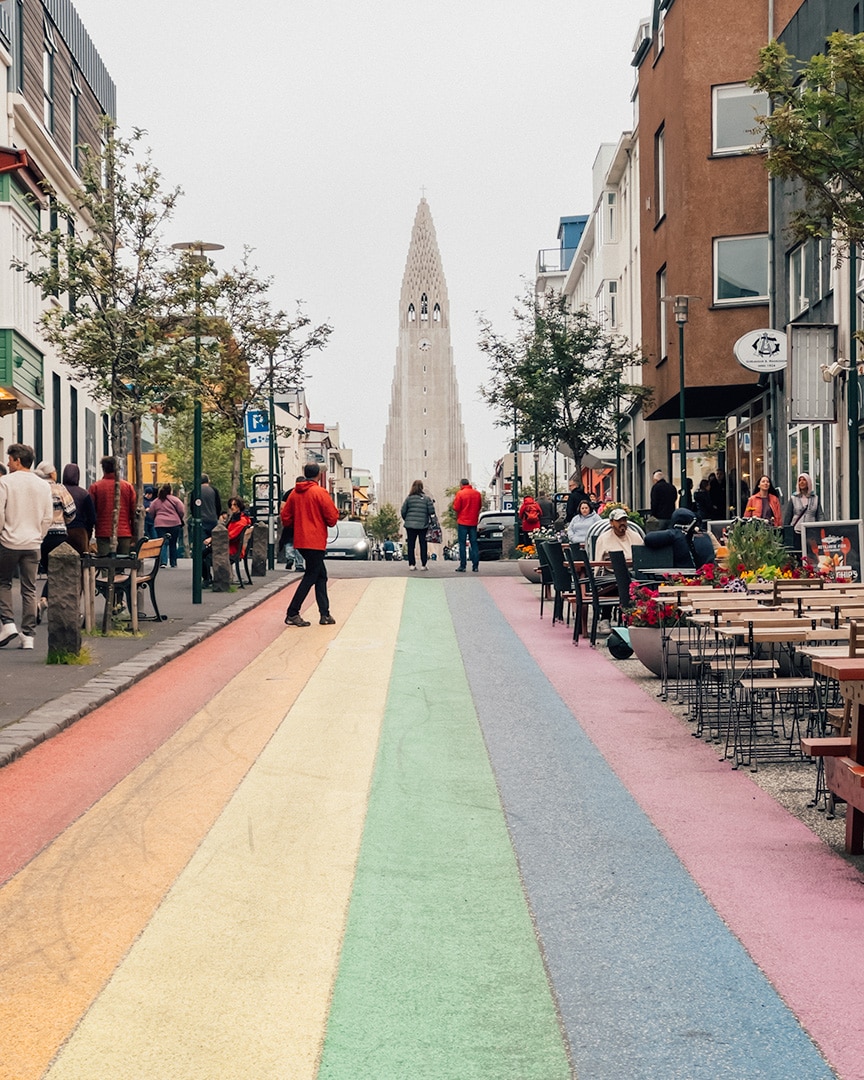
If you’re still in sightseeing mode, there are numerous sites you can visit. These include Hallgrímskirkja, which is Iceland’s tallest church, the famous Rainbow Street, which celebrates Reykjavik Pride and the Sun Voyager sculpture that honours Iceland’s history.
Where To Stay
If you’re not flying back home at the end of day 5, then you’ll want somewhere to stay that’s easy to explore the city.
Accommodation: Astro Hverfisgata
These fully equipped apartments are in the perfect location and are based at the top of one of the main streets in Reykjavik.
Here you’ll have a kitchen with an oven and stovetop, a balcony, a coffee machine and a living/dining space. Considering the location, I thought the apartment was very reasonably priced! It’s also very close to one of the bus stops that connects you to the airport.
Accommodation: Eyja Guldsmeden Hotel
If you feel like a bit of a treat at the end of your road trip, the Eyja Guldsmeden Hotel is a perfect place to wind down.
This eco-conscious accommodation features sustainable products and a quiet location in the city. The hotel’s warm vibe, characterised by wooden tones and a fusion of boho and urban styles, adds to its unique charm.
Plus, guests can enjoy complimentary tea, coffee, and water, as well as access to a small gym!

When’s The Best Time To Visit Iceland?
The best and worst time to visit Iceland really depends on what you’re hoping to see, as every season has its ups and downs.
For this itinerary, though, spring and summer (May to August) are going to be when you’ll get the most out of your trip. The landscapes are lush, and with nearly 24 hours of daylight during the Midnight Sun, you’ll have plenty of time to explore all the locations in this guide.
This can be the busiest time of year, so things do get crowded and are a bit pricier, but it’s 100% worth it in my opinion. Just make sure to book your accommodation and car rental in advance.
Winter can also be a good choice if you’re travelling Iceland solo and looking to save some cash, with flights, accommodation, and car rentals sometimes up to 50% cheaper than in summer.
It’s also the time to catch the Northern Lights, with the best chance to see them from September to April. That said, winter also means colder weather, shorter days, and the possibility of road closures, which can make getting around a bit tricky.

Is Iceland Expensive To Visit?
I’d be lying if I said Iceland wasn’t expensive. Its high costs mostly come down to its remote location, which means a lot of goods have to be imported.
I’d say the prices are pretty similar to central London, with dishes costing anywhere from around £15 to £40, depending on where you choose to eat. To save some money, we decided to only eat out once a day and cook the rest of our meals.
We even packed some food in our luggage, things like pasta, oats, snack bars, and a few tins since we’d heard grocery shopping can be pricey too. Just make sure to check the rules on what food items you can bring into the country.
For groceries, stores like Bonus and Kronan are the more budget-friendly options. They’re also great if you’re on the hunt for vegan food, so you don’t need to worry about finding plant-based options!
Tips For Driving In Iceland
Driving in Iceland is pretty straightforward, especially on the Ring Road, which you’ll be following for this trip. Most road signs are in English and easy to understand, but there are a few key things to know before hitting the road.
Like most European countries, you’ll be driving on the right. One quirky rule is that headlights must be on at all times, even during the day. If someone flashes you, it’s probably because you’ve forgotten!
Iceland also has F-roads, which are only open in summer and require a 4×4. These roads are off-limits for regular cars, so if you do want to explore these, make sure you hire the right vehicle.
Be sure to check road.is, safe.is, and vedur.is daily for updates on road and weather conditions, as things can change quickly.

Final Thoughts
I think it’s pretty safe to say that you will have plenty to see while exploring the land of fire and ice! Iceland is one of my favourite places in the world, and I think you’ll love it too!
You’ll be sure to see all the diverse landscapes Iceland is home to on this 5-day itinerary. From slumbering volcanoes to piercing blue rivers of ice, the midnight s