Namibia Road Trip Cost 2026: How Much We Really Spent


If you’re dreaming of an African road trip, Namibia’s probably the first place on your list. But there’s one big question that always pops up… how much does a Namibia road trip cost?
I always knew this wasn’t going to be a cheap destination, but even I was a bit shocked when the costs started adding up. Between the park fees, fuel, campsites, and food (which, as a vegan, isn’t quite as budget friendly as I’d hoped), the total grew arms and legs pretty quickly.
We spent 25 days in Namibia, with 22 of those in a 4×4 camper, looping from Windhoek to Lüderitz, Sossusvlei, Swakopmund, Damaraland, and Etosha. We weren’t scraping by on the tightest budget, but we were definitely conscious that we’re now travelling full time, so splurging (sadly) wasn’t really an option.
I’ve worked out exactly what we spent, and it came to around £111 per person, per day, which includes everything (minus our flights).
Would I spend it all again? In 👏 a 👏 heartbeat👏
Namibia completely blew me away! Burnt orange dunes, crazy wildlife and more “holy sh*t” moments than I could count.
In this post, I’m breaking down exactly where that money went, what we could’ve saved on, and how much you might spend depending on your travel style (perfect if it’s your first Namibia trip!).
Our Exact Namibia Trip Costs (For 2 People)
Our budget for Namibia was pretty mid-range, not luxury, but not exactly roughing it either. We mostly camped with the occasional lodge or guesthouse every four to five nights.
Here’s a breakdown of what we spent in total for 2 people over 25 days:
- Camper hire including insurance (22 days): £2,625
- Campsites & accommodation: £1,047.56
- Fuel: £488
- Food & Drink: £869.76
- Laundry: £14.08
- SIM cards: £27.23
- Tours & activities: £488.54
Total: £5,560.17 (£2,780.08 pp)
This works out at £222.40 per day for 2 people (or £111.20 per person). This also includes our nights in accommodation either side of picking up and dropping off the camper too.
Accommodation: Where We Stayed and What We Paid
We spent £1,047.56 on accommodation over 25 days. Campsites were the most budget friendly, but the ones inside the parks were pretty f*cking expensive for what you got, especially when places just outside the gates offered way more for less.
If I’d had the budget, I’d have booked us into one of those stunning eco-lodges where elephants stroll past the pool, but what we spent in total would’ve only covered a few nights at most, so sadly, it was a no!

Camping Costs in Namibia
These prices are from August–September 2025, and they’ll shift a bit depending on the season. The exchange rate is based on what we paid at the time.
I’ve linked each campsite so you can check current prices for your trip. For a few of the bookings, we did have to email, as there isn’t an online booking system on some of the sites.
Most places charged us in Namibian Dollars (NAD), so I’ve converted everything into pounds to make life easier.
Where we camped (prices for 2 people):
- 1 night – Garas Rest Camp (Quiver Tree Forest) — £17.85 (400 NAD)
- 2 nights – Hobas Campsite (Fish River Canyon) — £85.80 (1920 NAD)
- 3 nights – Sesriem Campsite (Sossusvlei) — £179.72 (4020 NAD)
- 4 nights – Tiger Reef Campsite (Swakopmund) — £76.91 (1720 NAD)
- 2 nights – Spitzkoppe Campsite (Spitzkoppe) — £48.29 (1080 NAD)
- 1 night – Onguma Tamboti Campsite (Onguma Reserve) — £50.97 (1140 NAD) (the best campsite I think I’ve ever stayed in!)
- 1 night – Namutoni Campsite (Etosha) — £49.16 (1100 NAD)
- 1 night – Waterberg Wilderness (Waterberg Plateau) — £35.78 (800 NAD)
- 1 night – Urban Camp (Windhoek) — £26.83 (600 NAD)
Total: £571.31 for 16 nights of camping
Camping worked perfectly for us, especially because we stayed inside the parks at places like Sossusvlei and Etosha. It meant we could catch sunrise and sunset, without having to rush back to the gate. If you love photography or just love golden hours, it’s totally worth it.
Tips For Saving Money On Campsites
If you’re not bothered about sunrise/sunset access, camping outside the parks will save you quite a bit.
The camps just outside the gates are usually cheaper and have better facilities anyway. A good compromise is to book one night inside the park if you want to get to places for golden hour, then base yourself outside for the rest.
Lodges, Guesthouses & Hotels
We knew that spending 22 nights straight in a tent was pretty ambitious. We’re not in our twenties anymore (sadly), and our backs definitely remind us of that on some occasions.
So we broke things up with the occasional night in a real bed (and a proper shower!) plus the nights before picking up the camper and after dropping it off.
Where we stayed (prices for 2 people):
- 1 night – Hotel Uhland (Windhoek) — £36.57
- 1 night – 2FiftySix on Second (Lüderitz) — £40.65
- 1 night – Madisa Camp (Damaraland) — £112.26
This one wasn’t worth it for us tbh, the “glamping” tent was just a basic tent with two beds and an outdoor bathroom that didn’t work properly. - 1 night – Sasa Safari Camp (Outjo) — £44.40
- 1 night – Etosha Omusati Lodge (Just outside Etosha) — £122.34
- 2 nights – Chic City Flat (Windhoek) — £121.03
Total: £477.25
Were they worth it? Most of them, yes. Having proper beds, decent showers, and a break from the roof tent made a huge difference after 4 or 5 days of camping.
The only place I wouldn’t book again is Madisa Camp. It was in a lovely area, and the campsite looked stunning, but the tent setup wasn’t worth £112 in my opinion.
Tips For Saving Money On Accommodation
If camping isn’t your cup of tea, you can still keep costs down by staying in budget guesthouses in places like Windhoek, Swakopmund, and Walvis Bay. The bigger towns have plenty of choice.
Once you get into the more remote areas, options are more limited, and prices go up. If your travel dates are flexible, avoiding the peak months of June – October will make a big difference to how much you spend on accommodation.
How We Got Around Namibia (4×4 Rental + Fuel Costs)
We spent 25 days travelling around Namibia, and for 22 of those days we lived out of our 4×4 camper. It set us back £2,625 for the rental, plus £488 on fuel for the whole trip. Definitely not cheap, but absolutely worth it for the freedom it gave us.
I’ll break down those costs below, along with a few ways you can save a bit of money if you’re on a tighter budget.
Renting a 4×4 with a Rooftop Tent
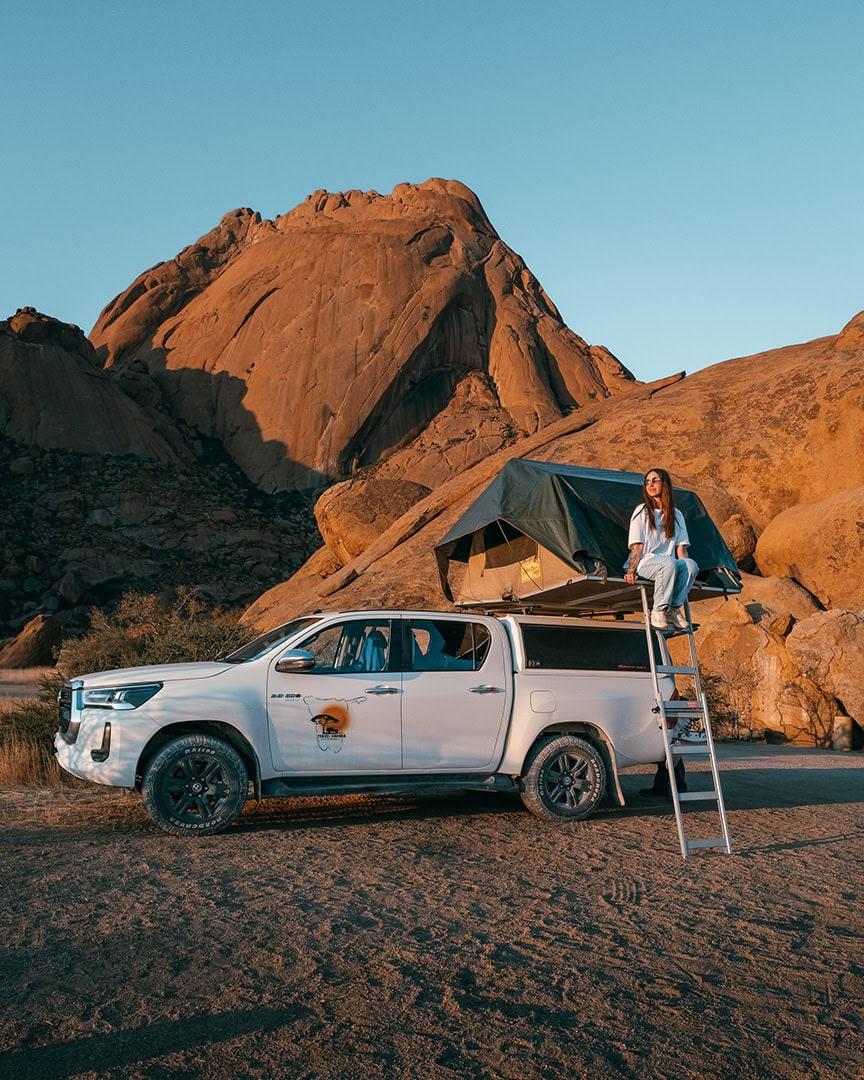
We rented a 2024 Toyota Hilux (double cab), which was an automatic for our Namibia road trip. A manual would’ve been slightly cheaper, but they’d already sold out by the time we booked.
We booked with Travel Namibia 4×4, who were amazing! We also added full insurance that covered the tyres and windshield, as I’d heard how rough the roads can be in Namibia.
Daily cost and total cost for the trip:
- 4×4 rental with roof tent: 2,250 NAD per day (approx £99)
- Excess waiver: 280 NAD per day (approx £12)
- Tyre waiver: 170 NAD per day (approx £7.50)
- Cleaning fee (one-off): 400 NAD (approx £17.50)
Total: £2,625 (based on the exchange rate at the time of us booking)
We picked the rooftop tent setup over renting a normal car and staying in guesthouses because we genuinely love the camping side of travel. And honestly, to get the same views we had from our campsites while staying in actual accommodation would’ve cost us way more (maybe one day!).

Fuel & Driving Costs
When I put our full Namibia route into Google Maps, it came out at 3,689 km, but that doesn’t include all the little detours, grocery runs, or the “let’s just see what’s down this road” side quests. Realistically, we drove closer to 4,000 km over the 22 days.
Fuel in Namibia averages around 20 NAD per litre, though most stations we used were sitting just under that (19-something). Prices are expected to rise slightly from December 2025, but during our trip, things stayed pretty steady.
When it comes to where to fill up, we didn’t notice much difference between stations, even the ones miles from major towns. Maybe we got lucky, but it never felt like we had to shop around to find the cheapest option.
The main rule though….fill up before every big drive. Distances between towns are long, and you really don’t want to be driving into the desert on fumes.
In total, we spent £488 on fuel for the whole trip.

Transport Alternatives To Save Money
The 4×4 rooftop tent setup is definitely one of the more expensive ways to travel around Namibia. It is worth it, but if you’re trying to save money, there are a few alternatives.
Just keep in mind that with rentals here, you really do get what you pay for. We met a couple using a much cheaper company, and their car was literally falling apart. The brakes were f*cked, and the company couldn’t have cared less.
So whatever you book, do your research and read the recent reviews.
Renting a Car Instead of a Camper
A standard car rental will almost always work out cheaper than a 4×4 camper. You’ll still need to pay for accommodation, but if you stick to guesthouses or budget hotels, it can still come in cheaper overall.
Another option we saw a few people doing was renting a car and a simple ground tent, then camping along the way. This definitely seems like the most budget-friendly combo.
2WD vs 4WD
If you’re only sticking to Namibia’s main roads, you might not need a 4WD at all. A 2WD is usually cheaper and absolutely fine for most of the country.
We personally needed the 4WD because we drove into the Sossusvlei dunes, but if you don’t want to tackle the sand yourself, there’s also a shuttle bus that takes you in instead.
Sharing a Car With Friends
So I know this one won’t work for everyone, but if you do know people who want to visit Namibia too, sharing a car can cut your costs massively!
I’ve even heard of some travellers turning up and finding other people in hostels who want to split a rental. Obviously not for everyone, (and please make sure you’re super aware on safety if you consider this), but it’s definitely something that people do.
Group Tours
If you really don’t want to drive, group tours are another alternative.
They can look pricier at first glance, but they usually include transport, accommodation, food, and a guide, so when you break it down, the value is actually pretty good!

Food & Drink: What We Spent
I’ve gone through our card statement from the trip, and we spent £869.76 on food and drink over 25 days. That works out to £17.39 per person per day, which honestly isn’t bad at all, especially since this includes alcohol.
After long days of driving, we’d usually treat ourselves to a beer and a cider, which are between £1.30 – £1.50, so it did add up, but still stayed pretty affordable.
Grocery Stores
We cooked for ourselves a lot on this trip, partly to save money, and partly because, as vegans, some restaurants didn’t have the greatest options for us.
What really surprised me was how much grocery store prices fluctuated:
- SPAR was the most expensive (it was convenient for water refills and quick bits, but not great for a full shop).
- Woolworths was my favourite as they had a few good vegan options and mid-range prices.
- Checkers was hands down the cheapest for fruit and veg. I remember finding an avocado for about a third of what SPAR was charging! I felt totally mugged off!
It is good to shop around on your first few days in Namibia though, to see which supermarket caters to you best, but the above is what I found based on what we would normally buy.

Restaurants
We didn’t eat out often, but when we did, most meals came to around £20 for the two of us, which usually included a drink each and a shared bottle of water.
One of our favourites was an amazing vegetarian Indian restaurant in Swakopmund called Garnish. They had lots of vegan options! We would order two mains, two starters, rice, naan, a beer, and a cider, and the whole thing came to around 450 NAD (about £19.90), which is just wild to me!
The one thing we did buy often was coffee, sometimes a couple of times a day! A coffee with alternative milk was around £2, which adds up, but felt worth it most days.
Tips For Saving Money On Food
If you’re really trying to save money, the obvious one is cutting back on alcohol, though honestly, Windhoek beer and Savannah cider are already pretty cheap, so it won’t make a massive dent.
What will help is making your own coffee if you’ve got a camper (our twice-daily barista coffees added up fast).
And knowing what I know now, I’d buy all my fruit and veg at Checkers because the price difference was huge. SPAR would be a last resort.
Cooking for yourself as much as you can is also the easiest way to keep costs down, especially if you buy things like a big bag of porridge for breakfast as this can go a long way.

What We Spent on Tours & Activities
This total includes everything, every tour we booked plus all the park entrance fees along the way. We only joined guided tours for places you can’t self-drive, and to be honest, they were 100% worth the money.
For 2 people, here’s exactly what we spent (and I’ve noted the entrance fees that were charged per person, per day):
- Sandwich Harbour — 4,700 NAD / £207.26
- Onguma Sunrise Drive — 1,780 NAD / £78.39
- Twyfelfontein Elephant Tour — 1,800 NAD / £79.26
- Etosha Entrance Fee* — 150 NAD pp/pd (600 total) / £26.41
- Sossusvlei Entrance Fee — 150 NAD pp/pd (900 total) / £39.62
- Fish River Canyon Entrance Fee — 150 NAD pp/pd (600 total) / £26.41
- Kolmanskop — 180 NAD pp (360 total) / £15.85
- Cape Cross Seal Reserve — 150 NAD pp + 50 NAD per car / £15.41
* On the 1st April 2026, the park entrance fee for Etosha increased to 280NAD (approx. £12.50pp per day).
Everything pretty much felt worth the cost, and I think we spent the right amount of time in each place.
The only thing I’d do differently is Fish River Canyon, we paid for two days, but you really only need one. And Sossusvlei can get expensive fast because you pay the entrance fee for every day you camp inside the park.

Tips For Saving Money On Tours & Activities
If you’re trying to keep activity costs down, the biggest hack is staying outside the national parks. You only pay the entrance fee on the day you actually go in, rather than getting charged for every day you’re camping inside the gates.
It’s also worth shopping around before booking any tours. We were quoted almost double for the Damaraland elephant tour through Madisa Camp, but after checking a few operators online, we booked with Twyfelfontein Elephant Tours for way less (and the tour was amazing).
And if you have your own car in Etosha, you really don’t need a guided safari unless you want the experience. You’ll still see loads on your own and save a decent chunk of money.
How to Save Money on a Namibia Road Trip
Visit Outside the Peak Months
The easiest way to save money on a Namibia road trip is to avoid the busiest months. Winter runs from May to October, but June through August is when most people visit, and prices definitely jump (July is the peak of peak). We were there at the end of August into September, so towards the tail end of high season.
If you’re travelling on a tighter budget, the summer months are the cheapest, just be prepared for serious heat and some rain. January and February are the least popular for travel, but they’ll save you the most if you don’t mind the weather.

Only Pay for the Park Days You Actually Use
I’m really glad we visited every park we did, but on my next trip, I’ll be a bit more strategic. For example, I wouldn’t camp inside Sossusvlei on days I’m not exploring. It’s amazing for sunrise/sunset access, but the daily entrance fees add up fast.
Same with Fish River Canyon, I enjoyed seeing it once, but I didn’t need two days there and probably wouldn’t go back again.
Choose a Car Over a Camper
A rooftop tent 4×4 is probably the funnest way to see Namibia, but it is more expensive than renting a normal car.
If you’re trying to save money, a regular hire car will work out cheaper, and if you shop around for guesthouses, it’ll probably come out cheaper overall. Plus, cars are much cheaper to run on fuel.

Cook For Yourself When You Can
Cooking for ourselves saved us a ton. If there had been more vegan options around, we probably would’ve eaten out a bit more, but cooking for ourselves ended up being the easiest (and cheapest) option.
Checkers was our go-to for groceries, especially fruit and veg, and SPAR was handy for water refills. It’s so much cheaper to refill your bottles than keep buying new ones, and it’s better for the environment too!
Do A Shorter Trip
If you’re trying to keep costs down, doing a shorter trip is an easy win. We saved for a while to do almost a month in Namibia (and we could’ve stayed even longer), but you really don’t need that much time to see the big highlights.
If you’re focusing on places like Sossusvlei, Spitzkoppe, and Etosha, you can cover loads with around 10 days, and this can keep your total cost way down.
Our daily cost worked out at around £111 per person, per day, so you can roughly multiply that by how many days you want to go to get a good idea.
Be Picky With Paid Tours
You don’t need loads of tours in Namibia. There are some things you have to book, like Sandwich Harbour, as you need a permit, and the Damaraland elephant tracking, as you won’t find them without a guide.
But game drives are optional if you have your own car. Etosha is super easy to self-drive, and you’ll still see loads without paying extra. And definitely shop around, as we were quoted nearly double for the elephant tour through one camp compared to what we actually paid.

Where You Shouldn’t Cut Costs
Insurance. Full stop.
Make sure you’ve got proper travel insurance and proper car insurance. Distances are long, towns are spread out, and if something goes wrong in the middle of nowhere, the costs can and will stack up fast. It’s just better for safety all round.
Make sure your rental also comes with spare tyres, although we were super lucky and didn’t get a flat, some people will have this happen multiple times during their trip, as the roads are pretty bad in some spots.
And while you’re at it, grab a SIM card when you land! We were told MTC has the best coverage throughout Namibia, and having signal in the middle of nowhere is worth every penny.

So, Is a Namibia Road Trip Worth the Cost?
For me? Absolutely, yes! Namibia honestly stole my heart, and I don’t think you can put a price on this kind of trip.
I’d spend every single penny again… even if my bank account might need a minute to recover. The only thing I wouldn’t repeat is paying £112 for that glamping tent at Madisa Camp, next time, I’ll just camp in the roof tent instead.
I’m a firm believer that you usually get what you pay for, and even though the 4×4 rental wasn’t cheap, it was so worth it for the peace of mind alone. We had zero issues with the car, and I know that if something had gone wrong, it would’ve been sorted quickly.
Our budget was pretty mid-range, but you can definitely do Namibia for less, or spend a lot more if you want to. The main thing is being realistic about what you can afford and what that budget will get you.
And if you’re heading off soon, make sure you pack all the essentials so you don’t end up buying things mid-trip that you could’ve brought from home.