Is Namibia Worth Visiting? The Honest Truth About Travel Here


Before I booked Namibia, I went down a serious rabbit hole. As a vegan who actually cares about seeing wildlife ethically, I needed to know what I was signing up for, not just visiting pretty sand dunes.
So if you’re weighing up the same trip, let me save you some of that digging.
After three and a half weeks road tripping through the country with James, I can say with my whole heart that yes, Namibia is 100% worth it. But… (and there’s always a but, right?) there are a few things you should know before you decide if it’s the right trip for you.
Namibia isn’t somewhere you can just wing it, it takes a lot of planning. We spent hours driving long distances on bumpy gravel roads, our budget vanished quicker than a spicy marg on a Friday, vegan was a term widely unheard of, and we had days when we were hot, dusty, and flat-out exhausted.
But I’d do it all again without a second thought. Wildlife roaming freely in Etosha, dunes lighting up at sunrise, some of the friendliest people we’ve ever met, I don’t think there’s anywhere else like it.
So, is Namibia worth visiting? Fuck yes. If you’ve got the time, the budget and the patience (and enough dried soy chunks!), I’ll talk you through the bits that make it so special and some ethical issues we came across, so you can decide if this adventure is right for you.
What I Loved About Namibia
Let’s start with the good bits, because they’re probably the reason Namibia even landed on your radar. They’re also the things that convinced me to book our trip, and they more than lived up to the hype for us.
It’s Safe For Tourists
One of the things I loved most about Namibia was how safe we felt pretty much everywhere we went, whether it was wandering through towns in the day or walking back to our campsite late at night.
Crime rates in Namibia are relatively low compared to a lot of other destinations, but like anywhere, petty theft does exist. The golden rule is to keep your valuables out of sight; don’t leave cameras, bags, or phones sitting in plain view in your car.
Speaking of cars, you’ll notice “car guards” everywhere. They’re people who watch over your parked vehicle for a small tip (usually around 10 – 20 NAD). At first, it seemed a bit strange to me, but it’s actually just the norm, and it’s a good way to support locals while also giving yourself peace of mind.
And when you’re not driving yourself, there are ride-sharing apps similar to Uber that you can use in some of the cities. They even have safety features like ride tracking and SOS buttons.
The only time I felt uneasy was on our second day, when a group of people surrounded our car asking for money. In hindsight, I don’t think we were in any danger, but it was frightening in the moment just because of the sheer number of people around us.
Nothing happened, and we left with no issue, but I felt awful afterwards because I genuinely wish we could have helped.

The landscapes are wild and untouched
Namibia’s landscapes were the first thing that blew me away and were the main reason we booked our trip. Even on a 10 day trip, you can see so much!
Pretty much as soon as you pick up your car in Windhoek, you’ll see wide open skies, empty roads, and views that stretch on forever. But what really surprised me was how much the scenery changes as you drive. Every few hundred kilometres, it feels like you’ve stepped into a different world.
Down south, there’s Fish River Canyon. I’d seen photos, but standing at the edge of the second-largest canyon in the world makes you feel so tiny. Head to the west coast, and suddenly you’re at Sandwich Harbour, bouncing through dunes on a 4×4 tour before watching sand roll straight into the Atlantic.
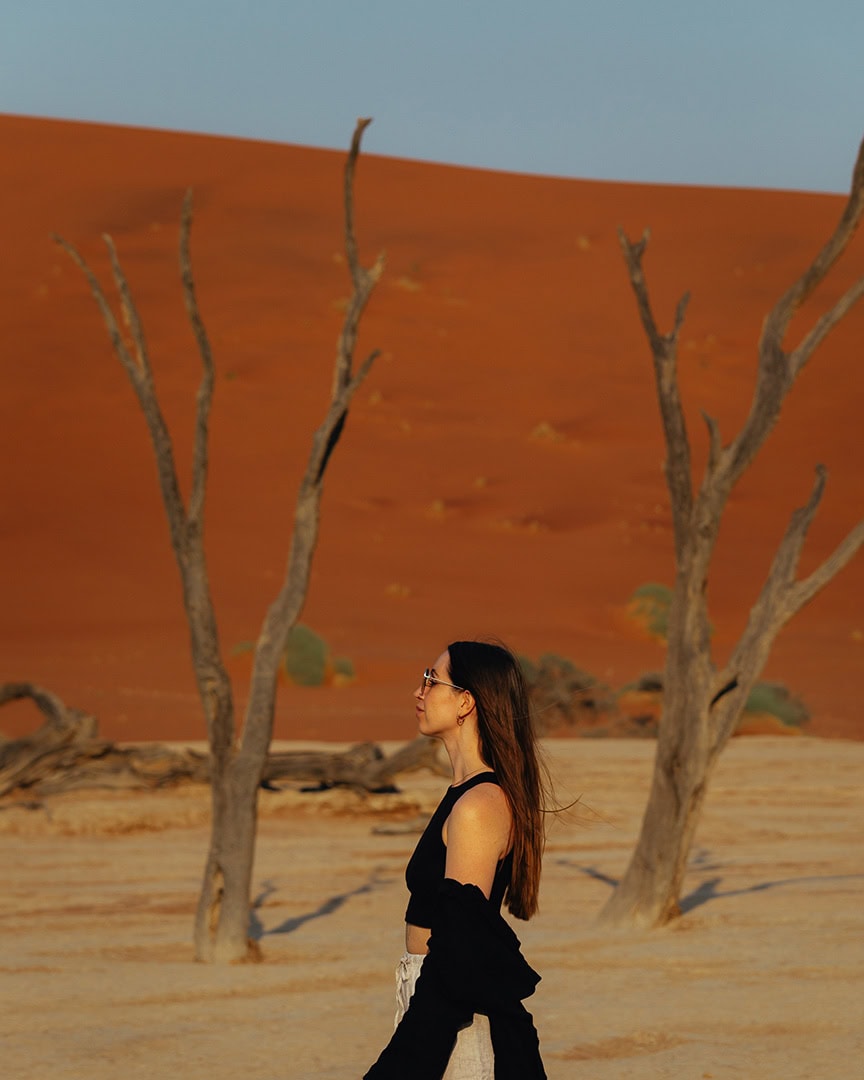
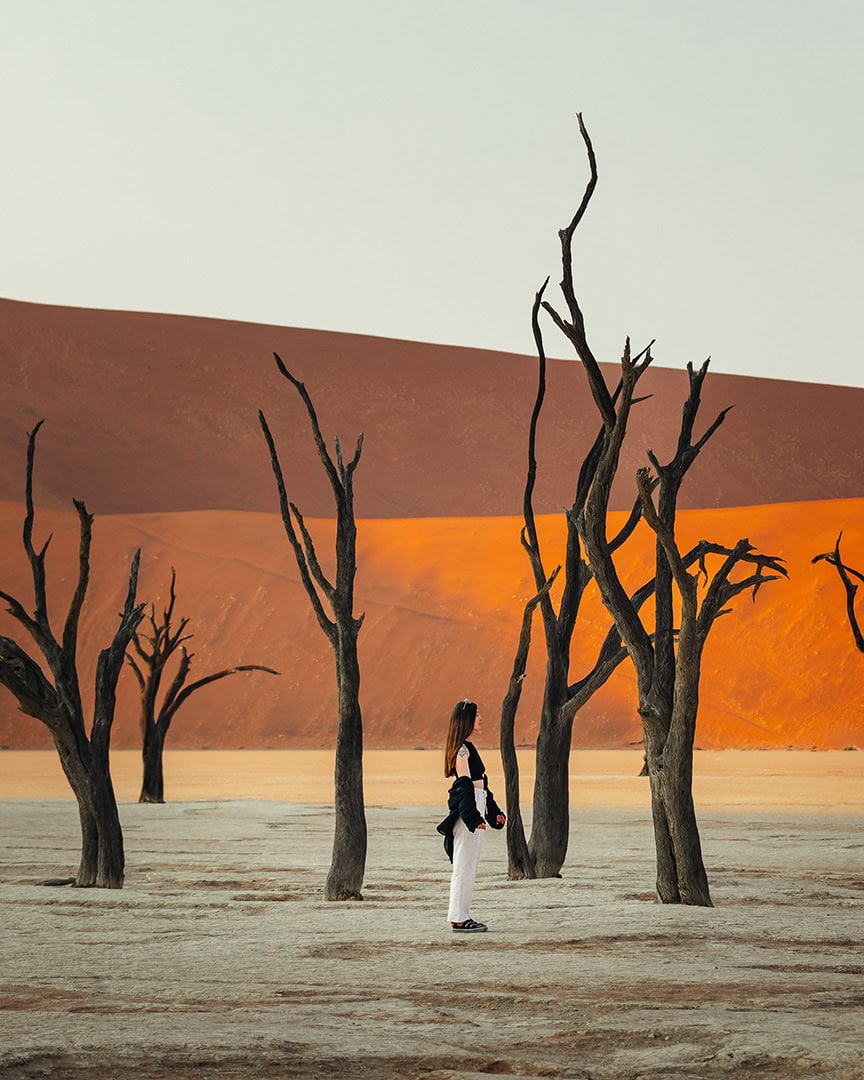
Sossusvlei is another highlight. The red dunes feel endless, and climbing Dune 45 at sunset was a brutal leg workout and pure magic at the same time. Just nearby, Deadvlei looks like another planet, a cracked white clay pan scattered with petrified trees and framed by giant dunes.
And then there’s the Skeleton Coast. Wild, windswept, and eerie, with shipwrecks half-buried in the water and whale bones bleached by the sun.
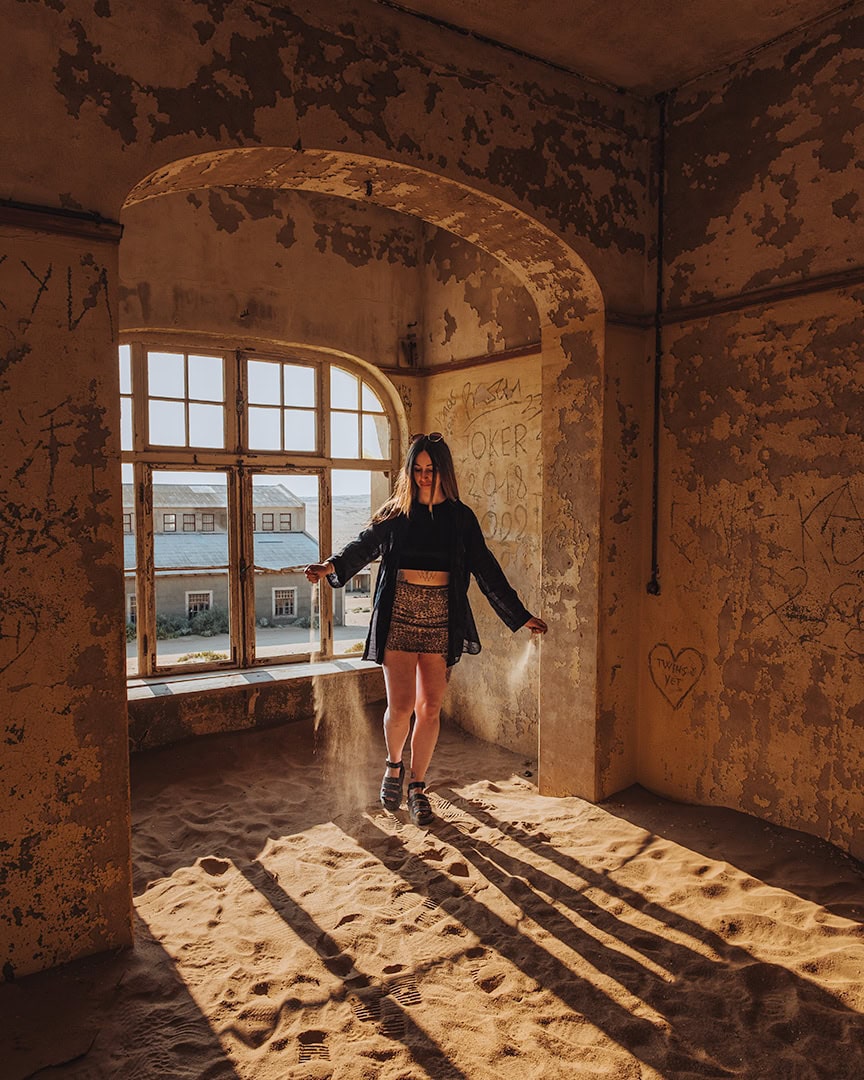
Even the drives between these big spots rarely felt dull! One day, you’re crossing desert plains, the next passing ghost towns that are slowly being reclaimed by the sand.
Namibia defo doesn’t do boring backdrops!

It’s Home To The Oldest Desert In The World
If the landscapes weren’t already reason enough to visit Namibia, here’s another: it’s also home to the Namib Desert, the oldest desert in the world.
Scientists reckon it’s been dry for at least 55 million years, and possibly closer to 80 million, which is just mad when you think about it.
On top of that, it’s where you’ll find some of the tallest sand dunes on Earth, glowing orange in the sunlight and stretching high above the desert floor.
The Freedom Of Doing A Self-Drive Safari In Etosha
Another thing that makes Namibia so unique is that you can do your own safari. In most countries, you’d have to pay for an expensive guided tour, but in Etosha you’re free to drive yourself, as long as you follow the rules: give the animals space, don’t disturb them, and definitely don’t get out of your car.
I loved how much the animals are protected here and seeing them in the wild really is the only way I’d be happy to see them.
You can see four of the Big Five here, rhino, lion, leopard, and elephant, and honestly, you won’t miss the buffalo. We were lucky and spotted lions in the shade, both black and white rhinos, herds of zebra, giraffe and springbok everywhere, and so many elephants I lost count.
The best part is that you’re in control. Drive at your own pace, linger at waterholes, and definitely check in with your lodge or campsite staff to hear which spots had the best sightings that day.
If self driving feels daunting, you can always join a guided drive, but for me, stumbling across wildlife on our own made every sighting feel that bit more special.

And While We’re On The Topic Of Wildlife…
One of the coolest things about Namibia is that you don’t even need to be on safari to see wildlife. We spotted a giraffe within about 15 minutes of leaving the airport in our taxi into Windhoek, and from there you’ll clock animals just driving between destinations.
We also visited Onguma Reserve just outside Etosha and saw leopard, cheetah, lions, wildebeest, kudu, jackals and zebra.
There’s also the Cape Cross Seal Reserve on the Skeleton Coast. I’ve never seen so many seals in one place!
Thousands of them sprawled across the beach. But full warning: the smell is intense. I was heaving the whole time and felt nauseous for the rest of the day, so if you go, bring something to cover your nose.
Ethical Note
I assumed that because Cape Cross is a reserve, there was nothing unethical going on. I was wrong.
There’s an annual seal cull here between July and November, supposedly to protect fish stocks, though that reasoning is very disputed.
It actually pisses me right off that somewhere marketed as a “reserve” is also a place where this happens.
I won’t tell you whether to visit, that’s your call, but I’d rather you go in knowing than find out afterwards like I did.
The Locals Are Some Of The Friendliest You’ll Ever Meet
Before our trip, I’d read that Namibians were known for being warm and welcoming, and we definitely found this to be true. Pretty much everywhere we went, people greeted us with big smiles and genuine kindness.
From our very first cab driver in Windhoek to the waiter at our first meal, we were met with such a warm welcome that it set the tone for the rest of the trip. Throughout our time in Namibia, people were patient, helpful, and always willing to chat or lend a hand when we needed it.
Of course, not every single interaction was perfect (you can’t expect everyone to be having their best day), but the overall feeling was one of openness and friendliness.

It’s Super Clean
Namibia feels incredibly well cared for. On our long drives, I kept noticing how spotless the roadsides were. We honestly saw more giraffes than plastic bottles.
Even Etosha takes it seriously; they’ll actually search your car before you go in to make sure you’re not bringing in any plastic bags. It might sound strict, but it’s one of the reasons the park (and the country in general) looks so pristine.
The effort doesn’t stop there, either. Campsites usually have separate bins for recycling, which makes it easy to do your bit while travelling.
The Night Sky Is Unreal
Back in London, I’m used to seeing just a few speckled stars on a clear night, if that. In Namibia, though, stepping outside after dark feels like walking into a planetarium.
Once you’re out of the towns and away from light pollution (which is pretty much most of the trip), the night sky is insane.
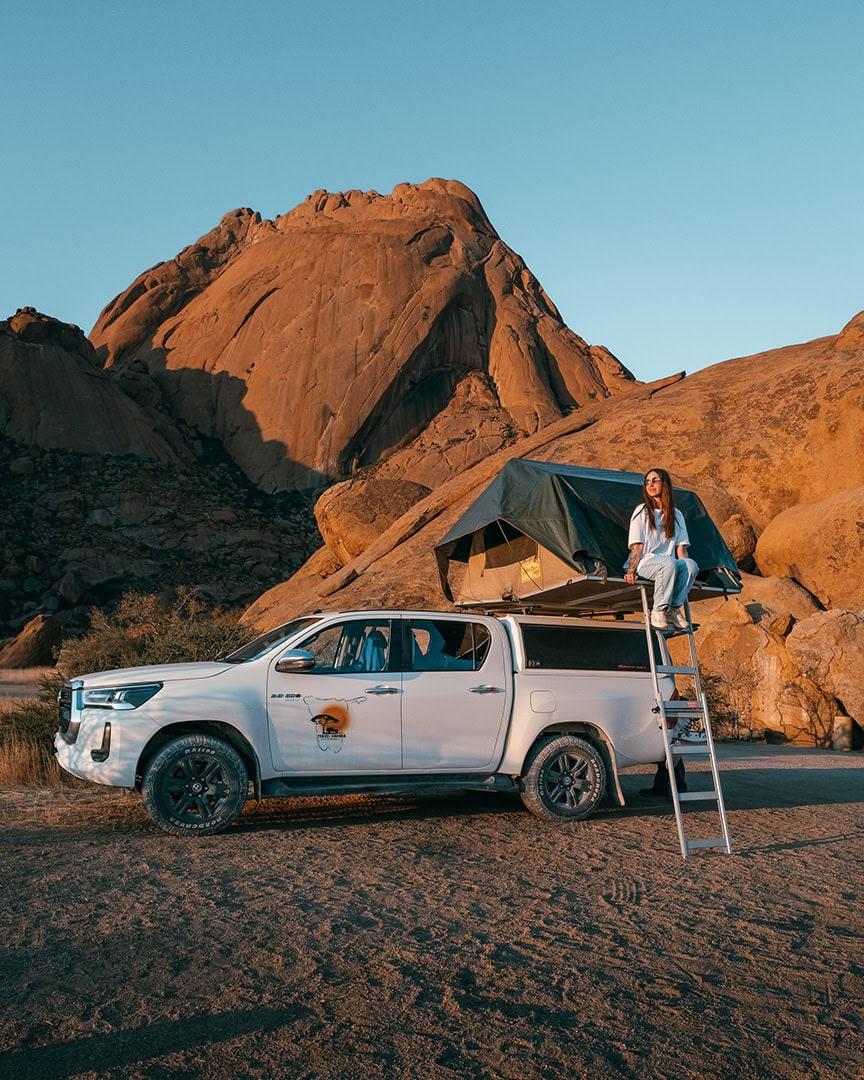
In Spitzkoppe and at the Waterberg Plateau, the stars were so bright we could actually see the Milky Way with the naked eye. And the wildest part……it was only 8pm. No staying up until the middle of the night required!
If you’re into photography, definitely pack a tripod if you have one. Even my iPhone managed to pick up the stars, which says a lot. But to be honest, no photo really does it justice.

The Bits I Didn’t Love
As with any trip, there are always a few downsides, and Namibia is no exception.
I’d read about most of these before we went, so I thought I was prepared, but even then, some things, like the endless gravel roads, tested my (and James’) patience more than once!
It Gets Expensive Fast
This one’s no secret, Namibia isn’t cheap, and costs can spiral quicker than you expect. Some days felt like we were literally burning through money once you added up the 4×4 rental, campsite or accommodation fees, food, and then fuel on top.
Our rental alone (a 4×4 with a rooftop tent and insurance) cost around £120 per day, and with the long distances, we were topping up fuel every three days, usually spending between £60–£80 each time.
On top of this, campsites can be anywhere between £20 – £35 a night, and tours can be a huge expense. It adds up fast.
That said, there were a few pleasant surprises. Shopping in supermarkets was pretty reasonable, and beers were cheap compared to London (less than £1 for a bottle, which definitely helped balance things out a bit).
But overall, the costs in Namibia mount up quickly, even if you’re cooking for yourself and trying to keep things low-key.

You Really Do Need To Plan Ahead
Like I mentioned earlier, Namibia isn’t the kind of trip where you can just wing it, especially if you’re visiting in high season.
Between May and October, campsites and lodges book up quickly, and if you leave things too late, you’ll either miss out or end up paying way more than you budgeted for.
Because most travellers self-drive, you’ll need to plan your route, how many days you’ll rent your car or camper, make sure you pack everything you need, and where you’ll stay along the way.
I spent way too long mapping all this out on a spreadsheet, it was an absolute ball ache, but honestly, it was worth it.
We booked our camper around six months in advance and sorted our campsites about four months ahead, which worked out fine.
The Distances Between Places Are Seriously Long
The distances between places in Namibia are no joke, and this was one of the hardest parts for me in our 3 week trip.
I get bored easily, and while the landscapes are stunning and you’ll spot plenty of wildlife along the way, a seven hour drive is still a seven hour drive. No amount of giraffes crossing the road is going to make me love that.
Everything is super spread out, so on days when the drive time was “only” two hours, I’d get so excited because it felt like a breeze compared to the norm.
And don’t be fooled by online maps either, if it says three hours, factor in at least an extra hour, because gravel roads can slow you down big time.

The Gravel Roads Can Be Sketchy
While we’re on the topic of gravel roads, let me just say… they are tedious. The constant bumping, the hidden potholes, the loose rocks that make your car skid, and the sheer amount of concentration it takes, it’s not exactly my idea of fun.
Locals jokingly call it the “African massage,” which did make me laugh the first time I heard it. Sadly, the roads themselves didn’t live up to the joke.
After a few hours of rattling around, I felt more like I’d done a shoulder workout than been treated to a massage.
Being Vegan In Namibia Isn’t Easy
If you’ve got any kind of dietary requirements, Namibia can be a bit of a challenge. We cooked for ourselves a lot, which honestly worked out fine, but eating out wasn’t always straightforward.
Vegan and veggie often got muddled up, and even after explaining a few times, we’d sometimes be handed something with cheese or milk in it that would have to go back.
We did manage to track down a few supermarkets (and I mean a small few) that stocked tofu, and whenever we spotted it, we cleared the shelves and stuffed the fridge.
I also came prepared and packed a couple of bags of dried soy chunks, just in case we couldn’t find any vegan protein.
And as someone who’s also gluten free, that added an extra layer of complication, but with a bit of planning (and a decent snack stash), we made it work.
Vegan Tip
Look in the cheese section at the supermarkets when you are looking for tofu (yes, seriously). This is where we found it almost every time!

The Internet Is Painfully Slow
If you’re planning to work while you travel, Namibia’s internet is a bit of a nightmare. At some places we stayed, the Wi-Fi wouldn’t even connect, and when it did, it could take minutes just to load a single page.
I actually looked it up, and Namibia ranks as having one of the slowest internet speeds in the world, which explains a lot.
We did find a couple of cafés in Windhoek and Swakopmund (Slowtown Coffee being a fave) with faster connections, which were lifesavers when we needed to upload photos or do a bit of work. But once you’re out at campsites or lodges, it’s better to expect almost nothing.
MTC does SIM cards with a decent enough signal, but that’s only good for basics like maps and checking emails.
The Weather Can Be Extreme
I’ll admit it, I didn’t fully believe the warnings about bringing warm clothes to Namibia (yes, silly, I know). Luckily, I threw in a light jacket at the last minute, because honestly, I don’t know what I would’ve done without it.
The days can be sweltering hot, and you’ll be melting just walking around. But as soon as the sun goes down, things can flip fast.
Nights can be really cold, and in some spots, you’ll wonder if you’ve accidentally teleported to another climate. Swakopmund, for example, felt damp and freezing in the evenings while we were there.
Of course, not everywhere gets that cold at night, but it’s definitely best to be prepared. Layers are your best friend here: light, airy clothes for the day, and a couple of jumpers plus a jacket for when the temperature drops.
The Poverty Gap Is Heartbreaking
I want to approach this next bit carefully, because it’s a topic that deserves a lot of care. It feels wrong adding this under things I “didn’t love” when it’s serious, but it’s something I do want to address rather than skip.
One thing worth knowing before you go is that Namibia has a significant poverty gap. People will ask you for food or money, whether you’re walking around town, stopped on the side of the road, or waiting at traffic lights.
There’s a lot of advice floating around about whether you should give money or food to people who ask, with some arguing it can do more harm than good in the long run.
But there’s a big gap between reading that theory and loading your food shop into the van with a child stood beside you asking for something to eat (I still think about this little one even now).
We always shared the food we had when we could. Whether that’s the “right” thing to do, I honestly can’t say, and I’m not sure anyone can. The last thing I’d want is to make the situation worse.
It’s something you’ll have to think through and make your own call on when you visit.

Would I Go To Namibia Again?
I’d go back to Namibia in a heartbeat, so I’d say 100% yes, Namibia is absolutely worth visiting. As soon as James and I were at the airport heading on to Tanzania, we were already talking about how much we’d love to come back.
Etosha and Spitzkoppe were two of our favourites, and next time, we’ve got our eye on the Caprivi Strip too.
For us, the good really did outweigh the bad. The long drives, endless gravel roads, and constant planning were tedious (and at times exhausting), but the landscapes, wildlife, and people made it all more than worth it.
That said, Namibia isn’t somewhere you go for a relaxing holiday. If you’re after lazy beach days and cocktail bars, this definitely isn’t the destination for you.
If you’re already sold, the next step is deciding when to go, because the best time to visit Namibia can make a huge difference to your trip, from costs to weather to what wildlife you’ll spot.