Is There Uber In Namibia? Best Alternatives 2026


Is there Uber in Namibia? Well, the short answer is no, but don’t worry! There are other ride-hailing options that work just as well (and might even be cheaper).
We spent weeks driving across Namibia’s dry, dusty terrain, and when we finally handed back our 4×4 at the end of the trip, we suddenly had to figure out how to get around without it for our last few days. Walking everywhere wasn’t really an option (it was far too hot for that), so we started looking into local ride apps.
Namibia has two main ride-hailing apps, LEFA and Yango. We only used Yango, but it turned out to be a super easy and affordable way to get around while we were in Windhoek. The app is simple to use, the rides were cheap, and as long as you’ve got Wi-Fi or mobile data, you’re good to go.
So, if you’re exploring Namibia without your own vehicle, or you’ve just returned a rental as we did, here’s what you need to know about both of these Uber like apps.
Does Namibia Have Uber?
So no, Namibia doesn’t have Uber or any of the other popular ride sharing apps like Bolt or Lyft, and it never has.
Instead, there are two local ride-hailing apps you can use in the more populated areas: Yango and LEFA. They work in a similar way to Uber, letting you book rides straight from your phone, and they’re becoming more common with both locals and travellers.

What Ride Sharing Apps Do Work in Namibia?
The two main transport apps you’ll find in Namibia are Yango and LEFA.
Below, I’ll break down what to expect from each one, from how they work, where they’re available, and which might suit you best while travelling.
Yango
You can use Yango in Windhoek, Rehoboth, Okahandja, Swakopmund, and Walvis Bay. The app’s super straightforward, you’ll see the price upfront before booking, can track your driver in real time, and even share your live route with friends or family for peace of mind.
Yango’s website also mentions that all drivers are vetted and they have an in-app SOS button in case you need to contact the emergency services.
We used Yango a couple of times while we were in Windhoek and were actually so shocked by how cheap it was. Our first ride was about 15 minutes across the city and cost just 18 NAD (around 80p!).
On the way back, we did the exact same route, which was nearly double the price (thanks to higher demand at that time), but still only about £1.50! So it’s safe to say Yango is budget-friendly even when prices fluctuate a bit.
There is an option to choose whether you want to pay via card or cash when you are booking your trip.
One thing to know: there isn’t currently an option to tip through the app, so if you’d like to tip your driver, it’s best to have a few coins or smaller notes with you.
Yango also offers food delivery (kind of like Uber Eats). We didn’t actually use it since we cooked for ourselves at our accommodation, but we did have a scroll through the app, and there were loads of options available.
They even have a package delivery service, just in case you ever need it!


LEFA
LEFA is Namibia’s first homegrown ride-hailing app, and while we didn’t personally try it, it seems like another solid option for getting around Windhoek, although from what I’ve seen, Yango does feel a bit more user-friendly. At the moment, LEFA only operates in Windhoek, so you won’t be able to use it elsewhere in the country.
The minimum fare is 40 NAD, which is actually why we didn’t end up using it, as our trips with Yango were cheaper than that! It’s worth comparing prices between the two apps before you book though.
Like Yango, LEFA shows you the total cost upfront, so you’ll always know what you’re paying before confirming. You can pay by cash or card, which makes it pretty flexible depending on what you prefer.
LEFA is also a popular choice for airport pickups from Hosea Kutako International Airport and transfers to hotels and lodges, which makes it handy if you’re flying in or out of Windhoek and have loads of luggage.
All drivers are vetted, according to LEFA’s website, and the app even includes a panic button feature that alerts their HQ if you ever feel unsafe (a really nice safety addition for solo travellers especially!).
If you’re mainly sticking to Windhoek or need a reliable airport transfer, LEFA is definitely worth downloading alongside Yango, just to see which one works cheaper for you.
Yango vs. LEFA: Which Ride App Should You Choose?
This one really comes down to personal preference and what kind of ride you’re booking. Both Yango and LEFA seem to work well, but there are a few differences worth knowing before you book your ride with either of them.
We only booked our rides with Yango during our trip, but I found the app super easy to use and, for shorter rides at least, it usually came out cheaper. LEFA seemed like a better fit for longer transfers, like getting to or from the airport, rather than quick trips around town.
That said, it’s still worth downloading both apps and comparing prices on the day. Sometimes one is faster or cheaper depending on demand, so it pays to check both before you book.
5 Must-Know Tips for Using Ride Apps in Namibia
1. Always Confirm the Driver + Route
So both Yango and LEFA make it easy to check who’s picking you up. You’ll see the car make, colour, registration number, and driver’s name in the app. Always double-check these details before hopping in.
Some pickup points can get busy, and a few drivers might be in similar-looking cars. The last thing you want is to end up on the wrong ride!
2. Expect Cancellations, Especially During Peak Hours
This is pretty common with any ride-hailing app, but it’s worth knowing that drivers sometimes cancel during busy times. It usually happens if there’s heavy traffic getting to you, or if there’s a price surge and they decide to wait for a higher fare.
It’s obviously not unique to Namibia, the same thing can happen anywhere, but it’s a good reason to give yourself a little extra time if you’re heading somewhere on a schedule.

3. These Apps Don’t Work Outside Major Cities
Yango has slightly wider coverage than LEFA, but both are still limited to Namibia’s main towns. At the time of writing, LEFA only operates in Windhoek, while Yango works in Windhoek, Rehoboth, Okahandja, Swakopmund, and Walvis Bay.
Once you head into more remote areas, ride-hailing apps basically stop working altogether. Most travellers rent a car to get around, and to be honest, it’s the best way to explore Namibia anyway (unless you book onto a group tour).
In smaller towns, you might not even see local taxis, so just something to keep in mind if you’re planning to travel beyond the cities.
4. Internet Access May Be Spotty
Both Yango and LEFA apps need an internet connection to work, so you’ll either need a local SIM card or a strong Wi-Fi connection when booking. You’ll also need to stay connected to track your driver and route.
Internet in Namibia can be hit and miss at times, even in cities, so it’s worth sorting a local SIM card as soon as you arrive. We were told that MTC has the best coverage overall, and even though they were the only one we used, we found that it was pretty good.
5. Keep Some Change Handy
While tipping isn’t expected for taxi drivers, it’s still a nice gesture, especially if you had a nice journey with your driver.
The apps don’t give you an option to add a tip at the end (like Uber does), so it’s worth keeping a few smaller notes or coins handy just in case.
Is It Safe to Use Yango and LEFA in Namibia?
Both Yango and LEFA state that their drivers go through background checks and vetting before they’re approved to operate, which definitely adds peace of mind.
That said, no transport option anywhere is ever 100% risk-free, and Namibia is no different. Our experience with Yango was really positive, and I personally felt safe during both of our journeys (I actually felt really safe in Namibia on the whole). If I came back as a solo traveller, I would definitely use them again.
On both apps, you can share your trip details with someone so they can track you in real time, while LEFA has a built-in panic button feature, and Yango has the SOS button for extra reassurance.
Overall, I found Yango to be a safe and reliable option based on my experience, and LEFA seems to be on a similar level in terms of safety.

Can I Use Ride-Share Apps at Namibia Airports?
Both Yango and LEFA can be used straight from Hosea Kutako International Airport, so it’s worth downloading and setting up the apps before you fly. That way, you’re not trying to sort it all out after a long-haul flight (because no one wants to be faffing around with passwords and downloads at baggage claim).
If you’re planning to get a local SIM, you can grab one from MTC at the airport, which means you won’t have to rely on patchy airport Wi-Fi to book your first ride.
What’s the Best Way to Get Around Namibia (Besides Ride-Share)?
You’ll only be able to use ride-sharing apps in the larger cities, so once you’re out exploring the rest of Namibia, you’ll need an alternative plan. The good news is that there are a few other great ways to get around.
This really depends on your travel style and how much independence you want. Before you set off, it’s worth checking the best time to visit Namibia too, as what you’ll see (and how hot it’ll be!) can change a lot through the year.
Rent a Car or Camper
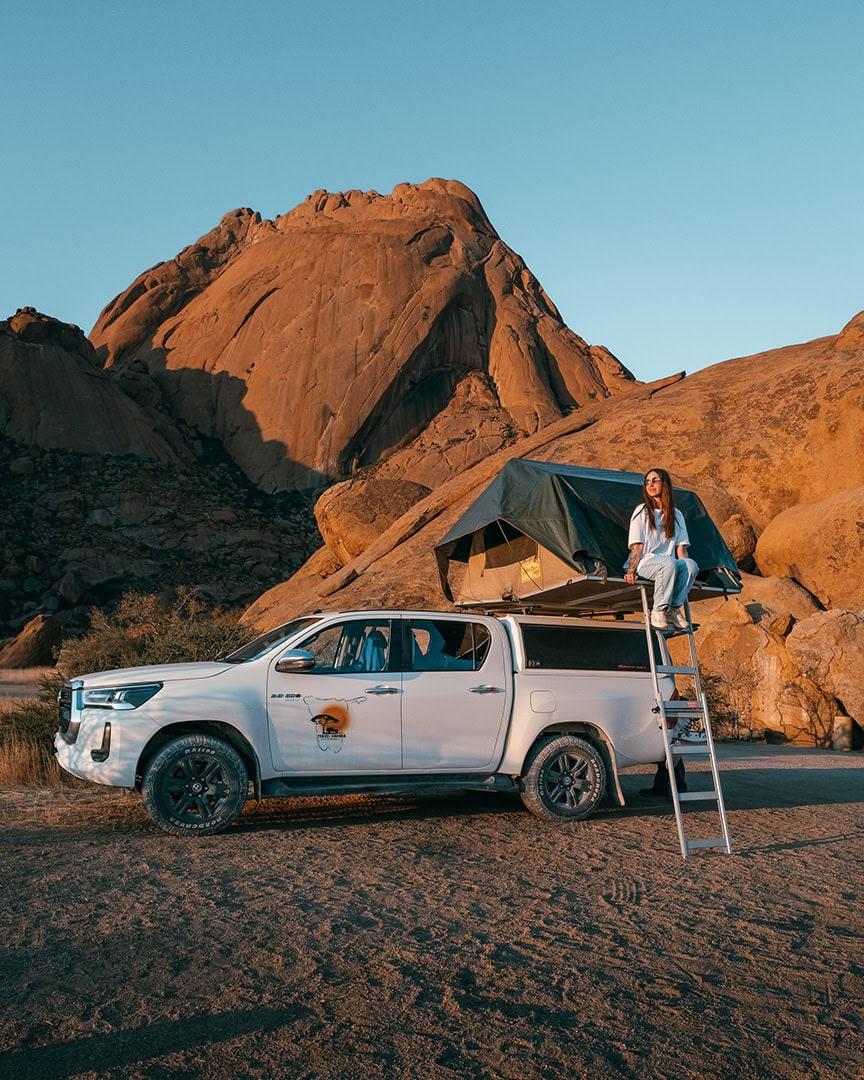
This is the option we went for! We rented a 4×4 with a roof tent, which became our home for 22 days. If that’s something that could work for you, having your own vehicle is hands down the best way to see Namibia.
You can travel at your own pace, stop wherever catches your eye, and it just makes the whole trip a bit more fun!
Just keep in mind that not all of Namibia’s roads are tarmacked, a lot of them are bumpy gravel tracks, so you’ll need to be a confident (and safe!) driver. It’s all part of the adventure, but I probably wouldn’t recommend it if you’ve only just passed your test!
Cost-wise, this option can add up since you’ll be paying for the vehicle or camper, fuel, and accommodation or campsites along the way. But for the flexibility and the chance to explore places way off the beaten path, it’s absolutely worth it.
Take Guided Tours
While I didn’t do this option myself, it’s definitely something I would’ve gone for if I hadn’t driven or if I’d been travelling solo. Public transport isn’t really a thing in Namibia, so if you don’t drive, guided tours are one of the best ways to get around and actually see the country.
They’re also a great way to explore areas beyond Windhoek and Swakopmund, without the stress of navigating long, dusty roads yourself.
Plus, it’s a fun way to meet other travellers, especially if you’re going solo and want some company along the way.
Based on the sights you will see, the following tours are good options;

Use City Taxis
City taxis are another option, though you’ll only really find them in larger cities like Windhoek or Swakopmund.
The only time we actually used a cab was when we first landed in Windhoek, before we even knew about the ride-sharing apps! We grabbed a cab straight from the airport, which cost us 300 NAD per person.
If you’re in Windhoek, you can usually hail a marked cab on the street or contact one of the local companies directly (I’ve listed a few numbers below). Just make sure it’s a marked taxi before you hop in.
| Taxi Company | Contact Number |
|---|---|
| Dial a Cab | +264 61 223 531 |
| Radio Taxi Windhoek | +264 237 070 |
| White Rhino Taxi | +264 221 029 |
| Prime Radio Taxis | +264 272 307 |
| Express Taxis | +264 239 739 |
| Windhoek City Cab | +264 812 572 188 |
Public Transport
Public transport in Namibia is… pretty much non-existent. There are a few minibuses that run between towns, but they don’t run on a set timetable. They simply wait until all 15 seats are filled before leaving. So you could be waiting a few hours or even a day or two. It’s definitely not the most reliable way to get around if you’re on a schedule.
In Windhoek, there is a public bus service called Move Windhoek, which has 14 routes around the city. But the buses only run a few times a day (and some routes only operate Monday to Friday), so I wouldn’t rely on these either.
You can check out their route map and timetable before you go.
So, What’s the Best Way to Explore Namibia?
If you’re just getting around the larger cities, ride-hailing apps that are similar to Uber are great for shorter trips; they’re affordable, reliable, and super easy to use.
Call me biased, but after spending weeks behind the wheel of our 4×4, I genuinely think self-driving is the best way to explore Namibia. Having the freedom to go where we wanted, when we wanted, was exactly how we like to travel, and I actually ended up loving the driving (which was a huge shock to me!).
Of course, that’s not always an option for everyone, and that’s totally fine too. Group tours are another brilliant way to see this wild, beautiful country without the need to rent a car (and to meet other travellers too!).